
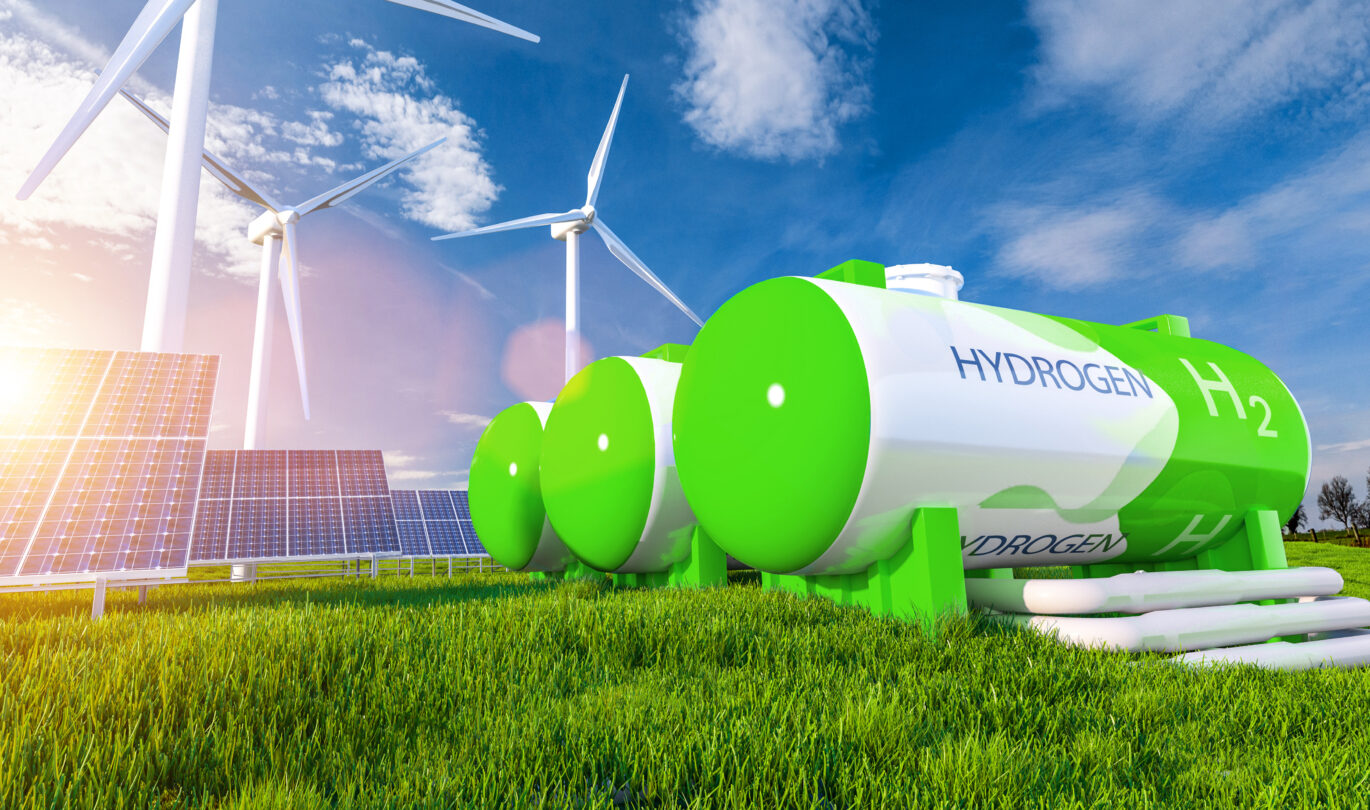
Much of the focus on green energy is centered around solar and wind generation. However, there are many different potential sources of green energy, and one of the most exciting, if not the most well-known, is green hydrogen (GH2). From pilot programs testing GH2 vehicles in manufacturing facilities to large-scale power production sites managing a GH2 value chain from end to end—including GH2 storage—organizations are innovating with sustainable hydrogen generation and use in many ways.
Like other emerging technologies, however, GH2 production is complex. As James Fraser and Ron Beck explore in a recent article in H2Tech,
“Successful production processes typically rely on managing intermittent energy, complex operational requirements, dramatic market fluctuations and uncertainty, and equipment with limited field operational experience. Each of these, along with a wide variety of other variables, must be accounted for in both project design and operational execution to deliver full value across the lifecycle of an organization’s operations.”
The solution? A born-digital strategy, founded in a Boundless Automation vision of seamless data mobility. Such a strategy helps teams increase flexibility and reduce risk to ensure better outcomes.
Improving flexibility
GH2 operations rely on green power generation—typically wind and solar—which means intermittency in production. The most obvious way to deal with that intermittency is to anticipate it and hedge production against it. However, organizations leveraging a seamless data infrastructure can often do more,
“Some organizations are using advanced process control and dynamic modeling software in parallel with forecasting tools to build solutions for dealing with the intermittency of renewable energy generation into their project design and operating strategy. Instead of designing green H2 generation plants that must always operate at 70%-90% capacity, these organizations are building electrolyzer units that can drop to 30%-40% capacity when renewable generation is low.”
When operators are properly warned and automation is optimized, teams can respond quickly, ramping down production to 10%, and then ramping back up again when conditions change. These types of scalable operations rely on fit-for-purpose green energy control systems like Ovation Green SCADA software.
More reliable operation
Success in GH2 production also requires operations to be running consistently and reliably. This can be particularly challenging in the emerging industry as many of the technologies necessary to produce GH2 are emerging themselves.
“For example, if a green H2 plant installs a new electrolyzer and months later discovers that membrane filtration is degrading faster than the manufacturer predicted, the operations team will quickly find that it is not always ready to produce to the expected scale, unless they can predict that degradation.”
Moreover, even assets that are well understood still experience wear and tear from day-to-day operation. Teams need to stay ahead of developing issues to ensure small problems don’t turn into unexpected outages, and that requires early warning.
Modern digital automation technologies and reliability software can help teams stay ahead of emerging problems and address them on their own schedule. Software like AMS Optics leverage powerful AI-enabled technology built into Aspen Mtell® to predict failures and guide fast response and repair.
Prepared for anything
The companies that pursue new manufacturing strategies like GH2 production will always face steep challenges due to being in the vanguard of innovation. However, they can still protect their investments and deliver improved outcomes by implementing powerful automation software as part of a Boundless Automation strategy. Doing so helps future-proof investments and eliminates risk while increasing flexibility— two key competencies that can help teams lock in competitive advantage as competitors enter the marketplace.