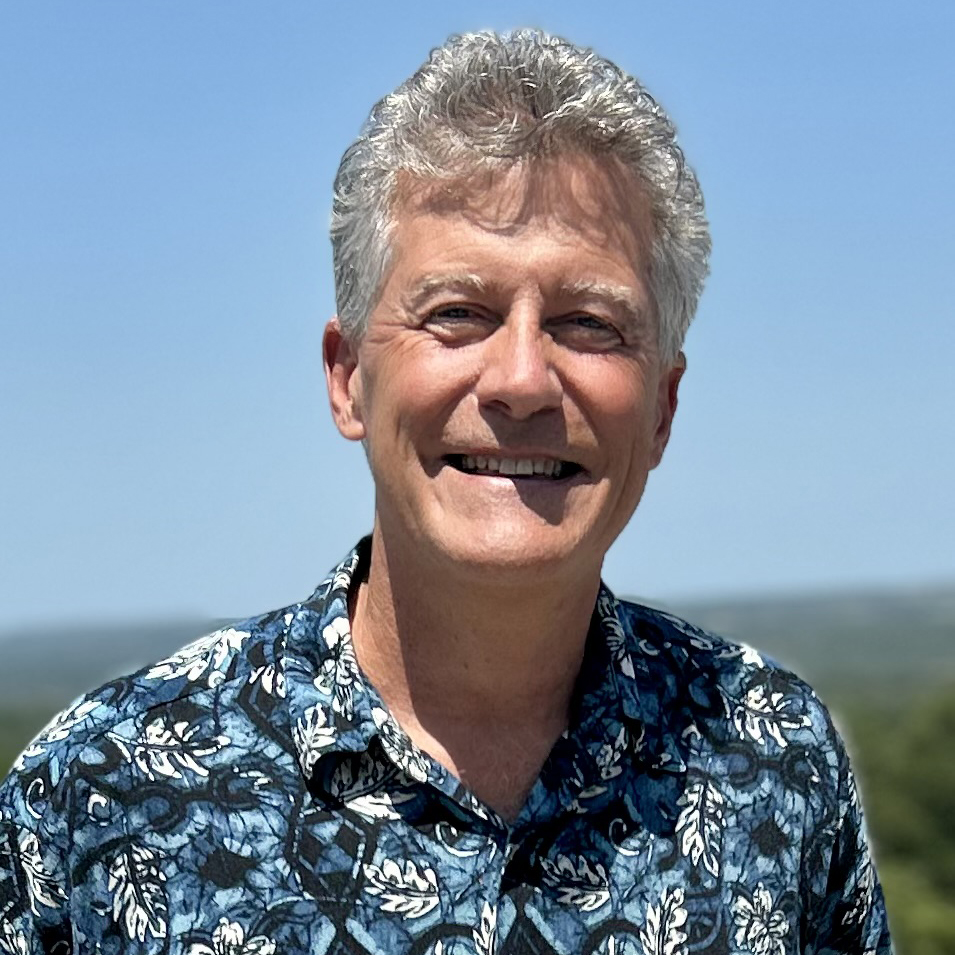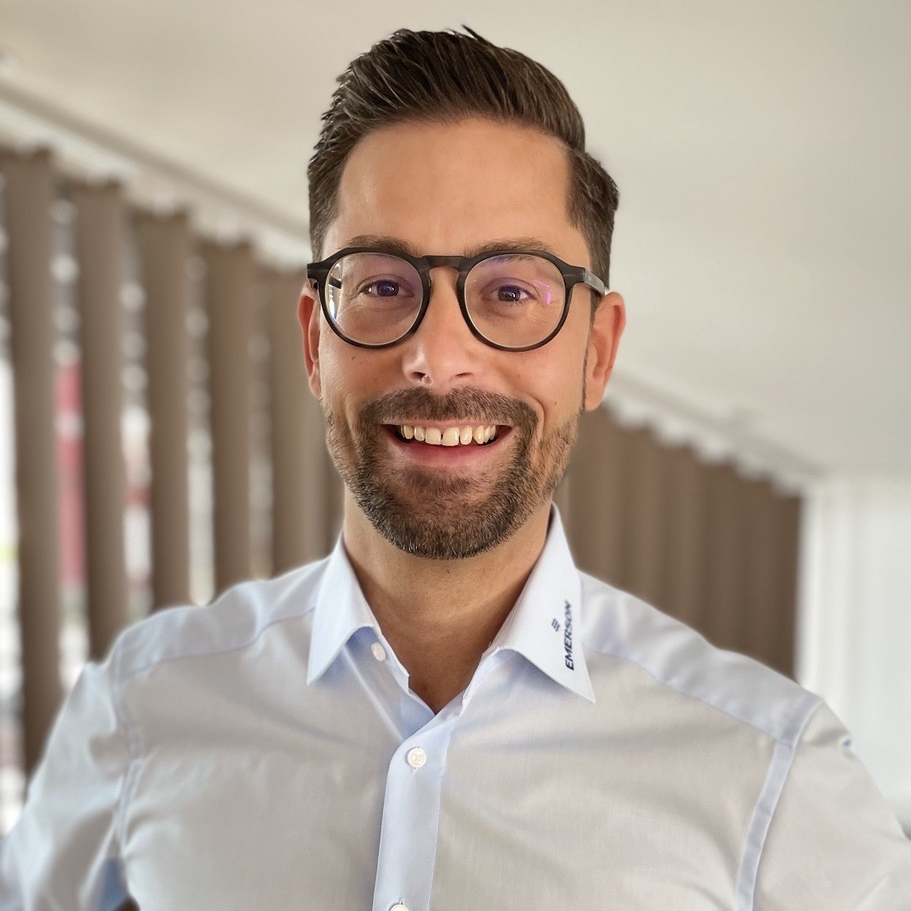
In this podcast episode, you’ll learn how Emerson is strengthening support for Isolation Valves across Europe by building a capable, accountable network of channel partners and accredited service providers. In my conversation with Emerson’s Knut Riegel, we explore what “proximity to the customer” truly means in practice, and which leading indicators signal a healthy maintenance, repair, and operations (MRO) & lifecycle service ecosystem.
Key Takeaways
- Producers & manufacturers don’t just buy valves—they buy availability. Building trained, empowered local partners reduces the risk of downtime and improves response times where they matter most.
- Europe requires a tailored channel model. The best elements of the North America Impact Partner approach (capability, accountability, enablement) must be adapted to the challenges in Europe’s many languages, regulations, and buying cultures to enable effective and efficient service levels.
- Service quality builds trust and loyalty. Accredited Service Providers (ASPs) and service-capable partners create consistent processes, documentation, and repair/retrofit decisions—and success can be tracked with leading indicators such as quote speed, certification levels, stock availability, and partner health.
Give the podcast a listen and visit the Accredited Service Providers section on Emerson.com for the effective and efficient service and support you expect for your valves, actuators, and regulators.
Transcript
Jim: Hi everyone, I’m Jim Cahill with another Emerson Automation Experts podcast. Valves are the workhorses of many processes and hybrid production and manufacturing processes. It’s essential to consider their full life cycle and the services required to keep them operating reliably and efficiently. Emerson’s Knut Riegel joins me to discuss services and the channel partners who deliver these services for these valves across Europe. Welcome, Knut. It’s great to have you back on the podcast.
Knut: Thank you so much, Jim. Always a pleasure and really appreciate it having a chance to be back on the show.
Jim: Yeah, it’s excellent to have you share your wisdom with me and our listeners. Now, I know we’ve crossed paths many times over the years. For listeners who don’t know yet, can you give us the quick version of your background and what led you to your current role at Emerson?
Knut: Yeah, sure. Thanks. To summarize it, I’ve been within the process automation for two decades now, mainly on roles around Europe. So my focus was and is final control. That means valve, actuators, and mission-critical flow control. I started actually very hands-on. I started after my engineering degree, I started as a site services engineer. And what I did, I was responsible doing installations, commissioning, and troubleshooting.
And being on site, on top of a product, looking to the eyes of a customer, teaches you what really matters. What really matters, if you’re asking me, is three things.
It is uptime, it is clarity, and most of all, it is response time. So then I moved into sales. I studied business studies and moved into inside sales, had a couple of BDM roles, which developed me into sales leadership, and then distribution strategy. I’ve been with the company, I’ve been with Emerson for six years now, I started back in 2020. I remember back at a COVID hard lockdown where we did a very first podcast, which I was really great.
I started at Actuation Technologies, covering Benelux [Belgium, the Netherlands and Luxembourg] and DACH region as regional sales manager. Then I moved on to the Isolation Valves (ISV) business, isolation valves for DACH Germany, Austria, Switzerland, as sales manager for local business partners. And today my role is distribution and service channel manager for ISV in Europe. And what I’m doing or my core mission, my focus is strengthening our European channel ecosystem.
Jim: Yeah, that’s going to be the thrust of our conversation today, all around that channel to make sure our customers in the region have what they need to make sure they’re operating in a great state.
So with today’s topic of strengthening isolation valve support across Europe through channel partners, what does that mean in practice and why does it matter now?
Knut: Well, in practice, it means to bring the competence closer to the customer. Let me explain into more details. I mean, customers don’t buy a product. They don’t buy, in our case, they don’t buy a valve. What they buy is availability. What they buy is, most of all, reliability. And what really matters, what they buy is response time.
Today, in today’s market in Europe, there’s a lot of market pressure. So it’s a cost pressure on energy prices and so on. What we also have on the other side is increased uptime expectations. For that reason, we aim to onboard more and grow our existing partners. So because by having that trained and most of all local partners, we have the chance and we do reduce the downtime.
So because proximity creates trust and you know it also from private lives, trust reduces friction in our day-to-day operations.
Jim: That proximity is everything in response time and just the partnership you create with the customers to be there when you need them and keep things going smoothly. So you’re right, that’s critically important.
Now, As North America has a strong Emerson Impact Partner (EIP) Network. How has that influenced your thinking in Europe?
Knut: Sounds like a leading question to say North America, we have a good network. I totally agree. So definitely in North America, our EIPs, our Emerson Impact Partners, they are a benchmark, great benchmark. Why? because they work very structured. They work exclusive for the territory. They are fully in line on the business, they are accountable, and most of all, they are all Emerson cross-business unit.
Copy and paste that one to another world area is not that easy. If I say Europe is different, it would be a little bit too easy to explain. So Europe is different because in Europe we have a fragmented market, so many fragmented markets. So we have so many different languages. We have different buying cultures, regulations, and therefore we also have the need of local SMEs, local subject matter experts, let’s call them local heroes, local champions.
For that reason, we operate with a hybrid model. That means on the left side, two swimming lines by coming together. That hybrid model means a direct coverage for accounts. Let’s call them home accounts. What is a home account? I’m not speaking about high-touch, low-touch customers, because this is not what I wanted to say. A home account is someone let’s say FSE, field sales engineer, is dealing for decades with the end user. He knows all the processes. He knows the market. He knows the decision makers. He knows all headwinds and tailwinds.
And for that reason, it does not make sense to route to another one. We try to keep that one on a direct sales force. But on top, we have clear, defined either, let’s say, geographic markets or responsibilities for our long-term partners. Coming back to your question, again, our EIPs in the US are really great.
So we take the principles of our well-established EIPs and adapt that one to European realities. And we have proven in several regions that alignment growth incremental, it drives incremental growth and supports our customers and sites.
Jim: That makes sense to bring in because the models of the way we go to market are different in the two areas and kind of picking the best of in the hybrid model you discuss.
So how does this align and how the isolation valve business is evolving in Europe.
Knut: So the market has changed. The market has changed fundamentally. In the past, we had more like an educational selling. The reason for saying that is Let’s make an example. We, one of our product brands is the Keystone brand.
We are the pioneer of the resilient butterfly valve, and therefore we had a massive sales force going out to a lot of sites and explaining the benefits of resilient seated butterfly valve against another valve, against a gate valve, which was dominating the market for another applications with a lot of benefits like smaller sizes, more price benefits and so on.
So today, the customers are well-trained and well-educated. But also they have some, not some, they have higher expectations on speed, on local service, lifecycle support and most of all on the complete integration of the package. Direct teams have limits. So if you are a sales engineer, you cannot look after 300 sites. You can pay your attention to several sites and support them in the best way. And our partners in that way, they have the ability to extend our reach.
But the key is clarity. It’s not about adding partners randomly just to increase the volume of the partners we have. We have clear roads and the right coverage model. So there’s no internal channel conflict, no internal competition. And when that alignment works, the growth accelerates naturally.
Jim: Yeah, I think that’s really important there. So let’s get into some specifics. When you onboard a new partner, what are the non-negotiables?
Knut: Oh, looks like you’re throwing me in at the deep end. So the non-negotiables are for a new one, for a new partner is, there might be a couple, there might be a couple of it. So the non-negotiables is, first of all is trust. It’s trust, the local trust and customer proximity and the whole reputation. We don’t want to destroy our own reputation by dealing with someone who has really a bad reputation.
Then what else? There is the technical capability. Technical capability in line with a mindset. With a sales mindset, with a mindset to a willingness to invest. It’s not just selling, it’s most of all supporting.
And another point, point #3, if you’re asking me, is transparency and the cultural fit. So the information must go in both ways. It’s not a one-way direction. So commitments must kept to have a coverage together, because without these, everything becomes transactional, right? And if we click all these boxes, the three boxes I mentioned, it’s a growth for all involved, it’s a sustainable growth.
Jim: That I can see that those are very important. I guess, considerations when you’re bringing on that new partner. Now, you know how I love to throw around acronyms. So I know you also oversee ASPs. So what does that stand for and why is it really important?
Knut: Yeah, thanks for asking. We have a lot of acronyms. I totally agree. So ASP stands for Accredited Service Provider. And service provider, accredited service provider is very important because, let’s make an example. You are off a day, it’s a sunny day, you are driving with your family out with your brand new car, and suddenly your car is telling you, I’m not feeling good, I have a sniffy nose, the light is flashing. And what are you doing?
You give the car shop a ring, and then you see what happens. So, service builds or destroys the trust. I mean, that example from the car is based on the loyalty. Because then if you’re really happy with all the service, you say, okay, I go again with that brand. If not, you might say, okay, I’m not happy with that one. Next time I go with a completely different one.
And in process automation or in our day-to-day job in businesses, it is exactly the same, right? So because service ensures consistency. It ensures the documentation. It also ensures the sound repair decisions to, in our case for example, a valve to go to change the EPDM [ethylene Propylene Diaphragm] seat ring or to go with a retrofit.
Service quality is, I can tell you from my own experience, it’s where long-term loyalty is built. For us in Europe at ISV, we don’t go on a black-and-white to say on the left side ASP and on the other side ADC [Accredited Distribution Channel], a distributor and a service partner. It can be both. It can be integrated partner with service capability driving real value.
Jim: That analogy of an auto mechanic and building that trust and having that accreditation process so they’re well-trained and able to do the things they need to do. That’s everything. And you’re right, you have one bad experience. You’re never going back to them. There’s no trust in that. So that’s absolutely essential.
Now, I know Europe is facing some tough conditions now in many industries like the chemical industry, the automotive industry. So what are the challenges and opportunities for those experiencing these tough conditions?
Knut: Yeah, Jim, you have a point. You definitely have a point. I would love to say no, I totally disagree. There’s only opportunities, no challenges, but that’s reality. So in Europe, let’s say CapEx [Capital Expenditure] is cautious. So as mentioned before, the cost pressure is real.
But there’s also something which is definitely unchanged, which are the expectations. But I also see there’s a shift from, let’s say, buying the cheapest one to to the operational value, which is becoming more and more important. So again, yes, we have a lot of opportunities.
There are also a lot of focus areas, downtime reduction, service speed, and standardization is a big thing. And also, we have a massive installed base around Europe, so the installed base upgrades modernization in line with the digital transformation there. If you’re saying, or if people say, no, Europe is completely down, there’s no opportunity. I totally disagree.
In parallel, we have growth segments. where we did not have a couple of years ago. Think about life science, think about pharma, think about the infrastructure, and most of all, think about the AI data centers. So again, Europe is, I say yes to a disciplined market [a mature, regulated, and value-driven market where decisions are structured, rational, and long-term oriented], to a challenging market, but I say no to a stagnant market. So there are a lot of opportunities, and I think we also have a good future.
Jim: Yeah, and I think that, given regulatory pressures, the need for more efficiency, more sustainable operations has a lot of opportunity. In addition to the new markets. I just recorded a podcast earlier about the isolation valves required for the cooling systems for these massive data centers in there. So you’re right, it’s kind of a combination of both looking the traditional industries and just operating as efficiently and reliably as they possibly can.
Now back to that car analogy, how we can go online and select the color, all the things we want about the car, basically configure what we want and get it that way. So in an ideal world, I imagine customers would want to configure valves like that same kind of process we might do with cars. How realistic is that?
Knut: You said in an ideal world, so unfortunately, we are not living in an ideal world, but let me explain, or try to explain. So what I see is the speed expectation is absolutely valid. Going to, let’s say, selecting, buying a car online, is very standardized.
So if you look at our products and principally valves and most of all the valve packages, it is different. It can be it can be complex. It can be complex because very often it is application specific. There’s so many materials, there’s so many pressure classes, certifications, and most of all, it’s not about in most cases, it’s not about a bare shaft valve. It’s about the automation itself with all these, the actuators on top, a tailored valve actuator [https://www.emerson.com/en-gb/automation/actuator] on top, all the instrumentation on top.
So what I see the need for customers, especially channel partners, is tools, digital tools, a guided digital tool. What we have with our MyEmerson store, which is really, you launch a configurator now, that one is a really guided tool. So what a job partner can do, he can go out and see visually the product, and can do the complete sizing of it. He can do the automation packets with so-called bundled solutions. And I don’t want to go into details, but what he sees, he sees his transparent net pricing. And he sees our availability, what we have on stock at the EFC, European Fulfillment Center in Germany, Mönchengladbach , where we offer them with a forecast stock for them.
So the future I see is more into that digital transformation, not only on the processes, but also on tools. And given the fact we as Emerson are an automation and software leader and have a lot of capabilities, this is only the beginning. So there’s more integration, there’s more speed, and there’s more simplicity to have all the info on the fingertip. So speed and simplicity will definitely increase. But our focus is and what we guarantee that is engineering integrity remains intact.
Jim: That sounds like a future where, yes, it keeps getting more efficient and what it takes to, you know, specify, build, deliver all that part of it. So that’s very encouraging that we continue to move that direction. So I guess looking ahead further, say five years or so, what defines success for us beyond revenue?
Knut: Okay, I just wanted to answer, and then you said beyond revenue. So again, I mean, revenue is, at of the end of the day, it all comes to P&L, right? So a top line is a important one. I can’t say no, it’s not, it has no impact. So top line revenue is an outcome. But there are much more indicators.
So like the response time, you send it RFQ, how fast you get a quote, the quote speed, the service quality, we discussed, the certs, level of certifications, the stock availability, what I raised before, and most of all, a big indicator and a big KPI is partner sustainability.
What I’m saying is, the big question is, are we building predictable value together? Speaking about the power of we, so customer experience metrics, they lead the whole performance. And we’re speaking about long-term relationships, and we’re speaking about this long-term relationship is about the ecosystem strength. And this beats all short-term volume.
Jim: I think it goes back to that, just building that trust and loyalty and the revenue and all that stuff will take care of itself, the way we optimize, the way we help our customers partner with them throughout the lifecycle of their facilities. Let’s wind things down, and I got one more for you. So what motivates you personally in this role?
Knut: You are asking me what motivates me. I’m motivated and for me, it’s all about impact. So why I´m saying this is, let me go down -one step. So last year I had a chance to participate in our Emerson European Business Academy, an intense one-year program.
Why I’m saying this, it was not only about the business, it was also about to learn about yourself, to reflect. And what figured out about me was I’m wired about customers, I’m wired about actions and collaboration. In parallel, I’m a learner. And this role fits exactly into that. So it’s a execution intersection, it’s hands-on, and it’s leadership with strategy together.
What also motivates me is trust. You also have it in a private life. You need to trust your partner at home. Otherwise you’re lost or maybe she’s lost. It depends. So what I think is a strong trust. I have a strong trust in my senior leadership, in my line manager who supports me in a great will, in a great way, who gives me , the freedom to take the decisions.
So what I’m energized by is if I see a customer, if I see a colleague, or most of all, if I see a channel partner in a visible progress. I’m energized also by seeing a partner stepping up, going to the next level, investing in them, and growing. If I see a faster response time. And the question is, when does this sustainable growth happens? What happens then? If we click on the boxes, what is the outcome? So the customer wins, the partner wins, and everybody wins. And that’s what motivates me really in a great way.
Jim: I think the whole path you’re on and leading there to take that best of, get this channel strategy identified that you’re on the road to its execution in here. So for our listeners, I would say you want to know what’s going on this front, make sure to reach out to your local sales office for what’s going on in your region.
Or I know you personally are very active. They’ll be able to click your e-mail in the post or your LinkedIn profile to get to you to get them into the right area if they’re not sure who to talk about this more. But I have great confidence that we’re going to continue down this path to serve our customers even better and better.
So thank you so much for joining us today and sharing your expertise with our listeners, Knut.
Knut: Thank you. I have to thank you. It was really great, as always.
-End of transcript-