
We’ve written many times about the work of the Center for Operator Performance (COP), a “diverse group of industry, vendor, and academia representatives addressing human capabilities and limitations with research, collaboration, and human factors engineering.”
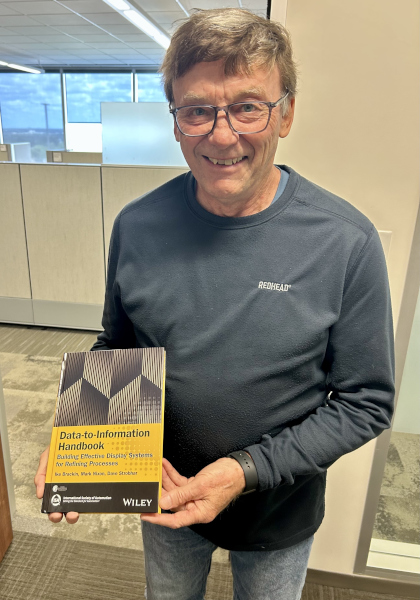 I crossed paths with Emerson’s Mark Nixon, the chief architect of the DeltaV control system, holder of more than 250 patents, and author of numerous publications. Mark has been active in COP for many years and has applied many of the research findings back into the DeltaV system.
I share this as background because Mark has collaborated with Flint Hills Resources’ Ike Brackin and COP founder and Chief Human Factors Engineer at Beville, Dave Strobhar, on a new book.
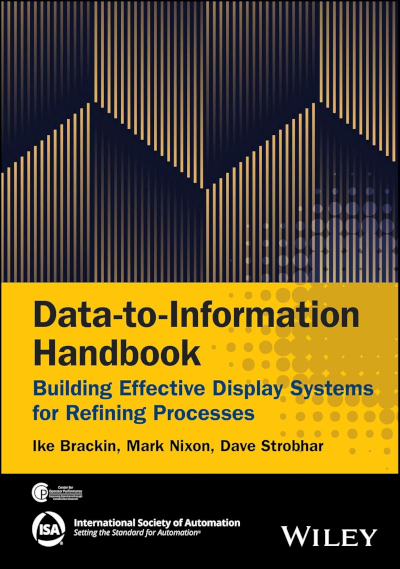
The book is titled Data-to-Information Handbook: Building Effective Display Systems for Refining Processes. The authors describe the book as:
…a practical guide for designing human-machine interfaces (HMIs) that transform raw data into clear, actionable information. Written by experts with extensive experience in control systems and operator performance, the book is grounded in the IEC 63303 and ISA-101 standards and offers comprehensive guidance on creating effective display systems that enhance operator decision-making and reduce uncertainty in continuous process environments.
 Written for project engineers, process automation engineers, display designers, and operators working in continuous process industries, it:
…explains display design principles and examples from continuous process plants across multiple industries. It specifies the information needed at each hierarchy level for major equipment and sections, with detailed representations for refinery processes. The book delivers three key applications: designing new systems, evaluating existing ones, and generating practical improvement concepts.
While the examples are specific to refinery operations, the lessons can be applied across many industries to improve “…operator confidence, reduce uncertainty, and support better decision-making in control rooms across refining, chemical, and related industries.”
Visit the Wiley publisher site or Amazon to get your copy today.