
In moving from a manufacturing and production world filled with data silos, how do we move to eliminate these silos to bring the power of Industrial AI to drive greater performance in safety, efficiency, reliability, and productivity?
One important element in this transition is data contextualization. But what exactly does it mean?
Data contextualization refers to the process of enriching raw data. In manufacturing and production operations, this can mean data from sensors and final control elements, machine logs, production metrics, and many other sources of raw data being generated continuously.
Enriching this raw data and bringing it together helps to break down silos and enable the creation of actionable insights. Data contextualization is foundational to unlocking the full potential of digital transformation. For example, contextualized data from Enterprise Resource Planning (ERP) and Manufacturing Execution Systems (MES) power simulations that optimize supply chains and adapt to disruptions such as material shortages.
Another example closer to the process is using a layered context for anomaly detection to avoid risks such as pressure buildup or contamination in hazardous environments. In a refinery’s distillation process, distillation column pressure readings are associated with crude oil sulfur content and ambient temperatures. This flags potential corrosion risks, triggering early notifications to address and mitigate the hazard before it escalates.
Solutions such as the AspenTech Inmation industrial data fabric enable data integration and management by connecting production operations to enterprise and cloud systems. It reshapes operational technology (OT) environments and provides aggregated, contextualized data for digital transformation initiatives.
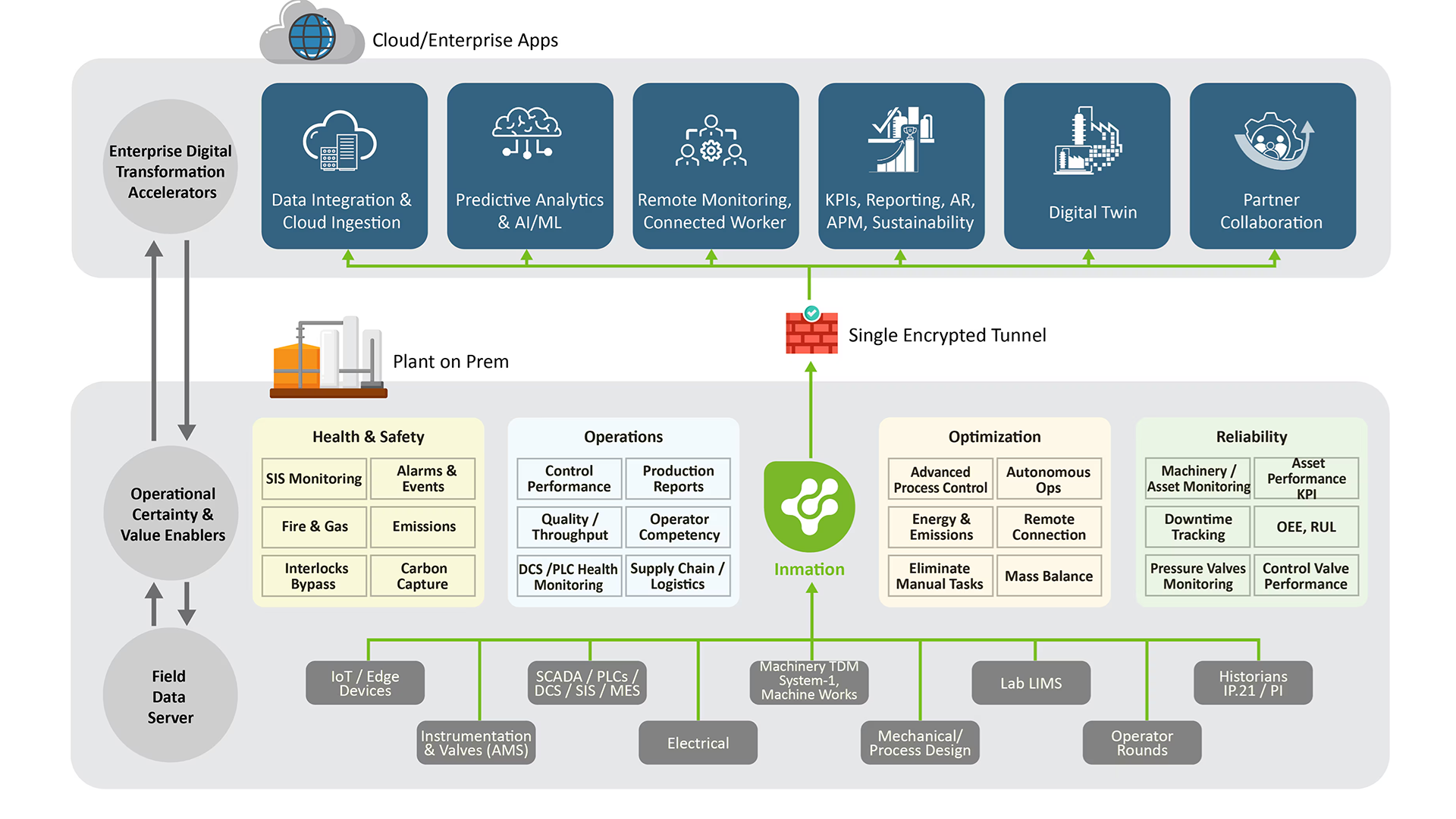
The platform liberates OT data and enables flows from the device to the decision-maker by aggregating, contextualizing, and centralizing it, making relevant information visible and accessible to all stakeholders. This enables efficiency optimization through analytics and visualization.
Visit the AspenTech Inmation industrial data fabric page to learn how companies are deploying this solution, manage enterprise-wide data connectivity, scale across global locations and data management, and fortify data protection and comprehensive security.
