
When selecting a valve pressure class, users often limit consideration to familiar ASME B16.34 Standard Classes, but awareness of lesser-known ASME classes can lead to significant cost, size, and weight reductions, especially for high-pressure weld end valves. My article in the June 2025 issue of Valve World, titled “Leverage ASME classes to reduce valve cost by over 50%,” discusses how manufacturers and purchasers can take advantage of these expanded class options.
Standard Classes
Engineers who routinely select valves typically have a solid understanding of ASME standard pressure classes.
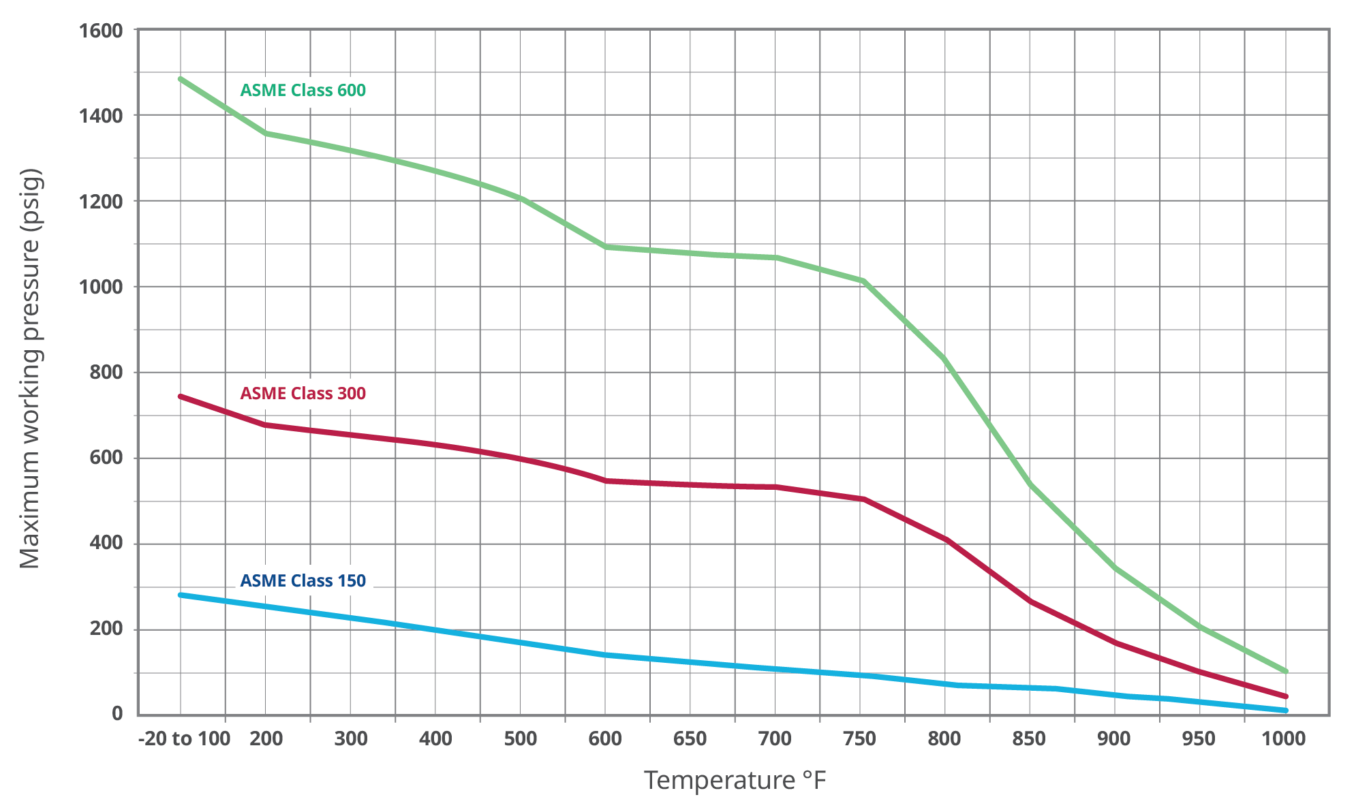
This chart shows the allowable pressure and temperature ratings of several standard pressure classes for carbon steel valves. As the temperature rises, the allowable pressure falls. For example, carbon steel tends to lose strength quickly above 800 °F.
They can easily use published pressure/temperature charts to quickly determine which class they need based on process requirements, but cost is always a consideration.
The difference in cost and weight between the same size valves in the lower pressure classes is minor. But as one jumps from CL900 to CL1500, and even to CL2500, the difference in valve cost, size and weight becomes very significant.
For example, moving from a 6” CL1500 valve to a 6” CL2500 valve nearly doubles the valve cost and weight, and the line take-out dimension stretches from 33” to 47”.
Special Classes
Some manufacturers offer ASME Special Class ratings for weld end valves. While Special Class valves have similar pressure ratings to Standard Class valves at ambient temperatures, they have increased ratings at higher temperatures. Non-destructive examination (NDE) testing is required for these valves, but the cost of this testing is often small relative to the cost of purchasing a higher-rated Standard Class valve.
Intermediate Classes
When a Special Class pressure rating is not enough to meet process needs, users may consider an ASME Intermediate Class valve. These are valves that have been rated to a higher pressure because their wall thickness exceeds Standard Class requirements.
Intermediate Class valves do not require additional NDE testing, but they are only offered in a limited range of weld end valve body styles. Like Special Class valves, they often provide significant savings compared to moving up to the next standard pressure class.
Intermediate Special Classes
Intermediate Special Class valves combine the traits of Special and Intermediate Classes. Weld end body valves that meet Intermediate Class requirements can be NDE tested to earn a Special Class certification.
The net result is a valve that has pressure and temperature ratings higher than the Standard, Special and Intermediate ratings.
Dramatic savings
Using an alternative valve class when possible is typically less costly than moving up to the next Standard class, but the savings are especially outsized when dealing with large valves and special materials. One application required a 16” x 12” valve in C12A martensitic stainless steel suitable for 1085 °F and 655 PSIG. Using a Standard Class CL2500 valve would have cost about $510,000, whereas an Intermediate Class CL688 also met the requirements at a cost of only $217,000—saving about $293,000.
Worthy alternatives
When specifying weld end valves at elevated pressures and temperatures, end users would be wise to consult their valve vendor about ASME approved Special Class, Intermediate Class and Special Intermediate Class options.
In many cases, these alternative classes can safely meet process conditions—with significantly reduced cost, weight, and size.
Visit the Fisher™ HP Series Control Valves section on Emerson.com to know how alternative ASME pressure class ratings can help you safely meet demanding process conditions while significantly reducing valve cost, size, and weight.