
Digital condition monitoring is helping maintenance teams improve reliability, reduce downtime and adapt to a changing workforce.
Unplanned downtime remains one of the greatest challenges facing process and manufacturing companies, as it impacts plant availability, productivity and profitability. While many plants still rely on scheduled preventative maintenance – servicing critical assets at fixed intervals regardless of their condition – unexpected equipment failures continue to take up significant time and resources. Although predictive maintenance offers a more effective approach, adopting the required technologies and changing established maintenance practices can be difficult, particularly for organisations with limited expertise or capacity.
These challenges are becoming even more acute as experienced maintenance engineers retire, taking decades of operational knowledge with them. The ability to spot early warning signs of equipment failure and diagnose root causes is increasingly difficult to replace, leaving less experienced teams responsible for maintaining ageing assets, often with fewer resources than ever before.
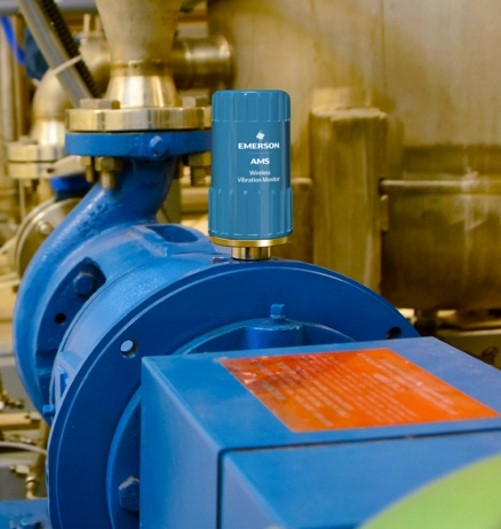
The AMS Wireless Vibration Monitor from Emerson can be applied to a broad range of rotating machinery.
Making Condition Monitoring More Accessible
In a technical article for All Instrumentation Industry magazine, I explain how modern digital condition monitoring tools are helping companies to tackle maintenance challenges, reduce downtime and support the next generation of engineers. The article states:
…We have already seen widespread adoption of vibration sensors to monitor various equipment. Plant-wide communications, particularly those featuring WirelessHART® networks, have simplified and lowered the cost of installing vibration monitoring devices. This has enabled companies to apply sensors to a much broader range of equipment such as fans, motors and pumps that are critical to production. Continuous condition monitoring is no longer reserved only for expensive assets such as turbines and compressors. Helping to manage the flood of data from these monitoring solutions is easy to use reliability software.
Turning Data into Actionable Insights
The ability to analyse vibration data from more equipment, and extract meaningful insights that support predictive maintenance strategies, is vital. The article describes how the latest vibration monitors offer much more than spectrum and waveform vibration data – they provide a simple and reliable indication of equipment health via a single trend. Maintenance engineers can access reports that quickly highlight which assets are operating normally and which require attention because they are beginning to fail. The article continues:
…Tracking and trending asset health also enables maintenance teams to apply predictive maintenance strategies more effectively. Knowing the status of every important piece of equipment allows work priorities to be set in a way that helps maintain production schedules while limiting the impact of equipment being taken out of service.
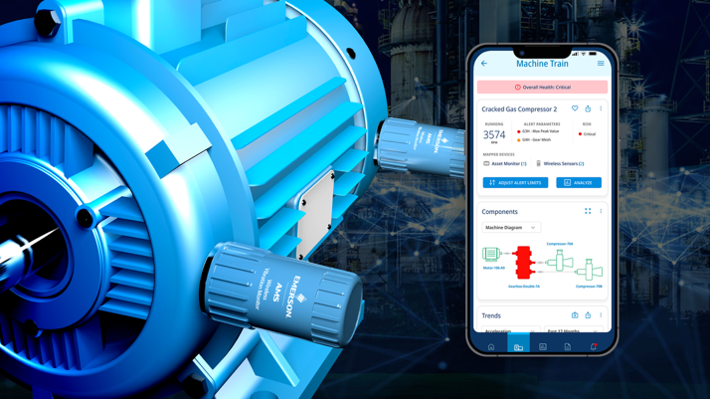
Emerson’s AMS Machine Works software analyses, reports and visualises data acquired from the AMS Wireless Vibration Monitor.
Supporting Smarter Maintenance Decisions
Furthermore, it has become far easier to access that information. Previously, an engineer would need to visit the equipment, collect data using a handheld device and then download it to a workstation for further analysis. Today, data is collected automatically 24/7, 365 days a year, with analysis performed either by the monitoring device itself, an edge device or centralised software. The information about each asset can then be accessed via a mobile device, meaning that technicians don’t need to be tied to a workstation and can carry out other tasks anywhere onsite.
Empowering the Next Generation of Engineers
I also explain how younger maintenance engineers, who have grown up with mobile technology, expect most data collection and analysis to be performed by digital tools, freeing them to deliver more high-value work. The article states:
…They also expect information about asset health to be readily available and easily accessible, allowing them full visibility of both current and potential developing issues. This should be accompanied with actionable advice delivered directly to mobile devices, supporting decisions, simplifying procedures and maximising the capability of every technician.
Adding Intelligence at the Edge
The article then describes how further intelligence is added via edge analytics devices which are installed close to the asset being monitored, reducing cabling requirements and installation costs:
…In addition to vibration data, these devices can collect process variables such as flow, pressure and temperature. Built-in analysis tools (embedded artificial intelligence), developed from decades of process experience, can identify common issues with equipment. This more holistic view allows the device to pinpoint problems and remove much of the guesswork. For less experienced technicians, this decision support can save significant time during troubleshooting, improving efficiency and minimising equipment downtime. Whereas maintenance teams previously needed to analyse raw data and manually convert it into actionable insights, much of this work is now handled by the edge monitoring device.
Managing Plant-Wide Machinery Health
With continuous monitoring now applied to a much broader range of rotating equipment, plants are generating significant volumes of data, and data overload can often become a challenge. Modern software platforms address this by consolidating information from multiple vibration sensors and analysers into a single, unified view of asset performance across the plant. As I explain:
…This “single pane of glass” approach allows maintenance teams to easily monitor, diagnose and resolve mechanical issues before they lead to unplanned shutdowns or affect product quality. These applications combine predictive maintenance techniques with advanced analysis tools to provide a clear and accurate picture of machinery health.
Extending Visibility Across the Enterprise
I conclude the article by explaining that organisations are increasingly looking to provide machinery health data not just to maintenance teams, but also for management.
…This provides greater visibility into equipment reliability and performance at both plant and enterprise level. Modern platforms now allow data from multiple facilities to be aggregated and standardised, enabling cross-site comparisons, benchmarking and continuous improvement initiatives across the wider organisation. Finally, seamless integration with enterprise systems is becoming essential, supporting more connected asset management strategies and unlocking further value from AI-driven insights.
For more information, visit www.Emerson.com/ConditionMonitoring.