Artificial intelligence is reshaping infrastructure well beyond the data center, and its first pressure point is often the plant. In a keynote to the Ovation Users’ Group, one industry veteran made the case that power, water, and wastewater operators are already living inside that shift, whether they realize it or not.
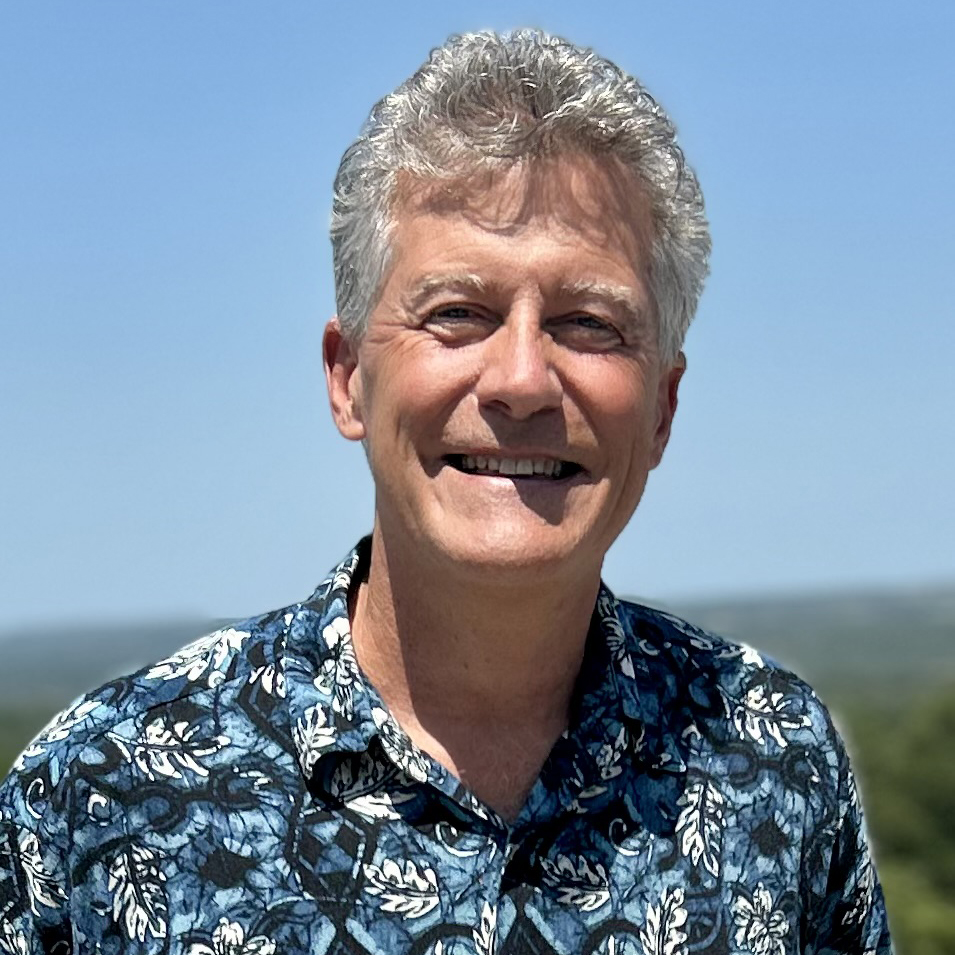
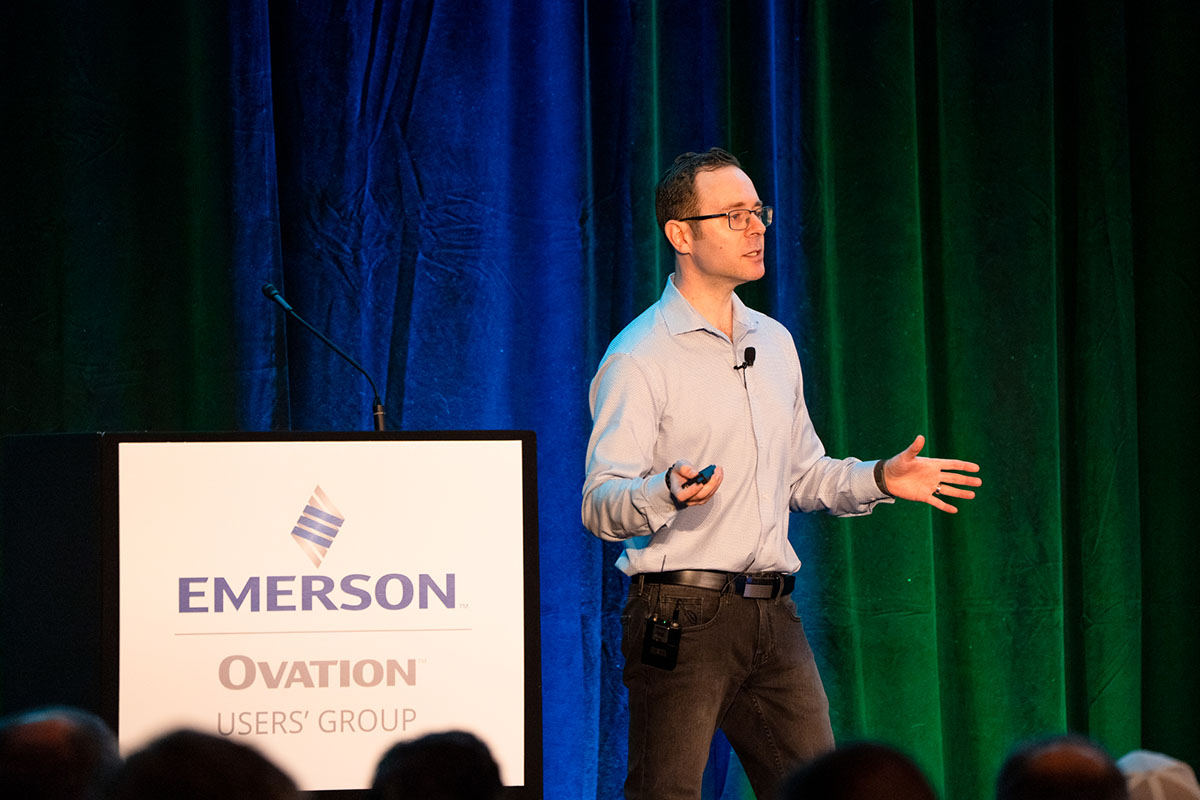 The presentation came from Bill Kleyman, Board Chair, CEO and Co-Founder of Apolo.us, who has spent more than 20 years in the technology space. Bill’s central point was direct: he was not there to turn plant operators into data center operators, but to help them see that these facilities are entering their world as new customers with new grid requirements, new microgrids, and new ramp profiles.
Why It Matters
The demand shift reaches plants first. According to the AFCOM State of the Data Center Report, 74% of respondents plan to deploy an AI-capable solution, and 72% say AI will significantly increase capacity. Bill argues that the metrics, requirements, and decisions land on plant operators before a single data center person steps foot inside a facility. That makes the expertise already sitting in the control room more valuable, not less.
Key Takeaways
- Data centers are arriving as new customers with larger loads, faster changes, and far less tolerance for outages.
- Data centers could consume 9%-17% of U.S. electricity generation by 2030—more than double current use,
- The grid, the customer (the data center), and the plant can no longer operate under separate assumptions; one shared operating picture is required.
- AI shows up first as focused assistance, not autonomous control, and always keeps a human in the loop.
- Cybersecurity is part of the control strategy, and operator knowledge is now among the most valuable assets in the room.
The New Load Looks Nothing Like the Old One
Bill walked through how quickly the numbers have moved. The average facility in this industry is now 38 megawatts, and a 100-megawatt building is just one building in a campus. These sites are being built in secondary and tertiary markets, from Wyoming to North and South Dakota to Omaha, Nebraska.
Rack density tells the same story. In 1988, the average rack density of a Microsoft data center was one kilowatt. Today the average is 27 kilowatts per rack, a 69% increase year over year. Bill described what fills those racks now: a single H100 GPU costs $40,000, a single DGX node holds eight cards, and one of Apolo’s partner data centers in Omaha holds six of those servers. These are not email servers anymore. As he put it, they are “Lamborghinis in a rack,” and a power fluctuation that takes cards offline is a serious, expensive event.
For operators, that means new attention to harmonics, ramp rate, voltage quality, ride-through capabilities, and site generation behavior. Conversations that used to be annual planning are now happening far more frequently and at a higher pace.
One Shared Operating Picture
Bill framed three aspects that used to work more or less independently: the grid, the customer (the data center), and the plant. That Venn diagram is closing quickly, and he sees it as a good thing. The Ovation Automation Platform is where those pieces come together, connecting forecast, ramp expectations, continuous generation, storage, and telemetry into one shared operating picture. There is no islanding here anymore. In this environment, he argued, trust becomes an operational control: operators need to trust their plans, their partners, and the systems capable of supporting this kind of infrastructure.
AI as a Partner, Not a Replacement
On AI, Bill was consistent. Most plants will encounter it through focused assistance long before any autonomous control, targeting the low-hanging fruit of troubleshooting, knowledge transfer and retrieval, maintenance, and shift handoffs. He pointed to a virtual advisor that finds procedures, understands anomalies, guides troubleshooting, and documents the response. The key word, he stressed, is that it helps the operator. It does not replace the operator.
He backed this with numbers from his own company, Apolo, which runs 21 agents across utilities, power systems, data centers, oil and gas, and manufacturers, and has replaced zero people. He shared a manufacturing example where senior engineers ran a 3 to 5% error rate on three critical tasks while junior engineers ran 20 to 30%. The concern was retirement, not headcount. By building engineering assistants that sit alongside senior engineers and capture their intellectual capital, the junior error rate dropped to 3 to 5%, and the company actually hired more people. The goal, he said, is capability and consistency, not removal.
For this to work, AI has to operate within a boundary, and that boundary is security. Bill called out segmentation, least privilege, allow-listed actions, change management, and testing, with reliability as a design constraint. Apolo runs on private GPUs and private models so customer data is never used for training. He warned against the pattern he sees often, such as a CIO uploading an entire business strategy into a public tool. He grounded the message in a simple discipline: be careful about the data you share.
The Operator’s Expertise Is the Advantage
Bill closed by naming three things to carry forward: understand the grid, understand the changing customer profile, and capture and share knowledge. With 65% of respondents planning on-site power or generation, and his industry forecast to consume 15 to 20% of all US power by 2035, the language plant operators already speak, covering generation, storage, islanding, dispatch, and maintenance, is becoming standard nomenclature in the data center industry. His parting line was a caution against strategy without follow-through: “Vision without execution is just hallucination.” The next era, he said, will be won by teams that connect energy and intelligence without surrendering trust.
Take the Next Step
To see how the platform behind these conversations supports reliable, scalable operations, explore the Ovation Automation Platform on Emerson.com to see how it can help your plant adapt, stay reliable, and prepare for the convergence of AI, energy, and critical infrastructure.