
In centrifugal and axial compressors, surge can occur when the flow direction reverses at the moment of surge. At this point, the shaft experiences cyclical axial load changes. An imbalance in the acting forces on the rotor causes chaotic radial shaft movement. All of this can damage seals, bearings, shafts, blades, and internally mounted sensors.
Beyond mechanical damage to the compressor, unplanned shutdowns have economic consequences. For example, a shutdown of the catalytic cracking unit in a refinery can cost over $1 million per day, excluding repair costs.
Antisurge control valves are an essential component in an effective surge control system. These specialized control valves require superior dynamic response, robustness, and easy tuning.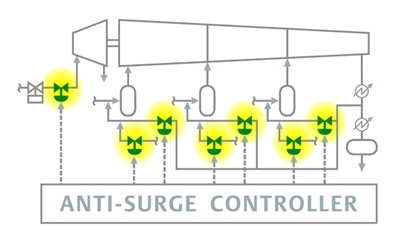
The document, Protect your critical compressors from failure and shutdowns, highlights the Fisher™ Optimized Antisurge Control Valves. These valves integrate antisurge control valve components—the valve, actuator, FIELDVUE™ digital valve controller, and associated instruments.
The FIELDVUE digital valve controller features a rugged I/P converter, a robust pneumatic relay, and potted electronics to protect it from harsh plant environments. By enabling faster, more accurate performance, the compressor can operate closer to the surge limit line, driving greater efficiency. This can mean significant reductions in operating costs—as much as $250,000 USD annually for a relatively small 4,500-horsepower compressor.
Read the document to learn more about these optimized antisurge valves as an essential component in your compressor operations.