
In a recent post, we introduced the Adaptive Gas Lift System (AGLS) – a new approach to gas lift optimization designed for greater efficiency and control. AGLS is a unique, low powered, electrically actuated gas lift valve system, that gives operators a level of control that is not possible with conventional solutions. In this blog, we’ll take a closer look at what that enhanced control really means in practice and how it can help unlock additional production. Let’s dive in!
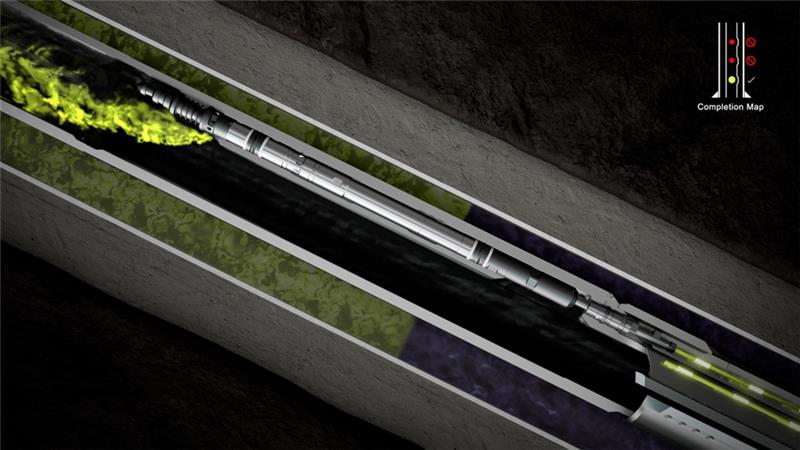
The AGLS allows operators to remotely optimize orifice size in situ and in turn optimize gas injection rates easily and effectively. This provides operators with an entirely different level of control for their gas lift operations. Let’s take a look at a few example circumstances where the advanced control benefits the operator.
In a traditional gas lift system, gas lift valves are configured with a fixed orifice size and set to open and close at specific injection pressures. By adjusting the injection pressure, the operator can close one valve and open a next initiating a change in injection depth. At times, however, this doesn’t take place as cleanly as intended, resulting in multi-point injection, meaning more than one valve is open at the same time. This is not the optimum arrangement and does not result in optimized oil production.
With the AGLS, the operator has an entirely different level of control, being able to remotely open and close valves as desired, as often as needed and without the need to lower the gas injection pressure. Indeed, there are variable orifice adjustment capabilities allowing the operator to tune the gas injection rate to the actual well conditions in real time. By using this enhanced control, the operator is handed the power to optimize the gas injection rate as needed, as often as needed, to ensure continuously optimized oil production conditions.
This enables the operator to perform quick multi-rate injection tests to determine the optimum injection rate for the well. This activity can be repeated whenever the well’s flowing conditions are seen to change. For example, the operator may find that, by increasing the gas rate, they are able to reduce slugging and enhance production and stability of the well’s flowing conditions. The AGLS gives a level of control that frees the operator to truly own the performance of the well.
The enhanced control provided by the Adaptive Gas Lift System enables operators to efficiently optimize production, in turn increasing and maintaining oil yield. Consider the traditional gas lift system, and the set conditions that result in valves opening and closing. Typically, this is based on well modelling and selected to be suitable for the majority of the potential production profiles. What if the flowing conditions are not entirely as expected? What happens as the flowing conditions of the well change over time? The traditional system provides the operator with limited opportunity to manipulate injection rates. With the AGLS however, each valve can be opened and closed at will, enabling production optimization from the first to the last day of a well’s production.
It is worth considering the later life of the well too. The ability to optimize production continuously is not only beneficial at the early stages of production, but also as wells age and decline. The control available supports operator’s ability to prolong the lifetime of the well and increase total reservoir drainage, ultimately enhancing well profitability throughout its lifetime.
One more thing worth mentioning: the Adaptive Gas Lift System can also act as a circulation valve from annulus to tubing for well kick-off applications, offering the operator yet another level of control.
With the Adaptive Gas Lift System, Emerson is proud to be part of the story of control and optimization for operators.
To learn more, watch the AGLS animation or visit https://www.emerson.com/en-us/automation/brands/roxar-home/adaptive-gas-lift-system.