
Refineries continue to operate under tighter constraints. Outage windows are shorter. Services are harsher. Expectations around safety and reliability keep rising. At the same time, many of the measurements that would support better decisions remain difficult to install or sustain because they rely on process penetrations and coordinated shutdowns.
A recent webinar, Zero Shutdown. Zero Intrusion. Real Results. The Next Step in Refinery Measurement Solutions, hosted by Lee Nichols with Hydrocarbon Processing Magazine, explored how non-intrusive measurement approaches are addressing that gap. The discussion, which included Emerson Experts Marcelo Carugo, Ingo Nickel, Roger Morrison, and Justin Vasquez, focused on corrosion and erosion monitoring, temperature measurement, and flow measurement, all applied through the containment boundary rather than inside the process itself.
Why it Matters
In refining, the challenge is rarely the lack of data. The challenge is whether the installation risk, outage dependency, and ongoing maintenance burden can be justified. When those barriers remain in place, uncertainty forces conservative decisions. Non-intrusive measurement directly targets those constraints by allowing new measurement points to be added without cutting into piping, breaking containment, or waiting for outages.
Key Takeaways
- Non-intrusive measurements can be installed through the containment boundary, often while units are operating.
- Continuous external measurements improve trend visibility compared to infrequent manual inspections.
- Better data at difficult locations supports earlier intervention and more confident decisions.
Asset Integrity: Moving From Snapshots to Trends
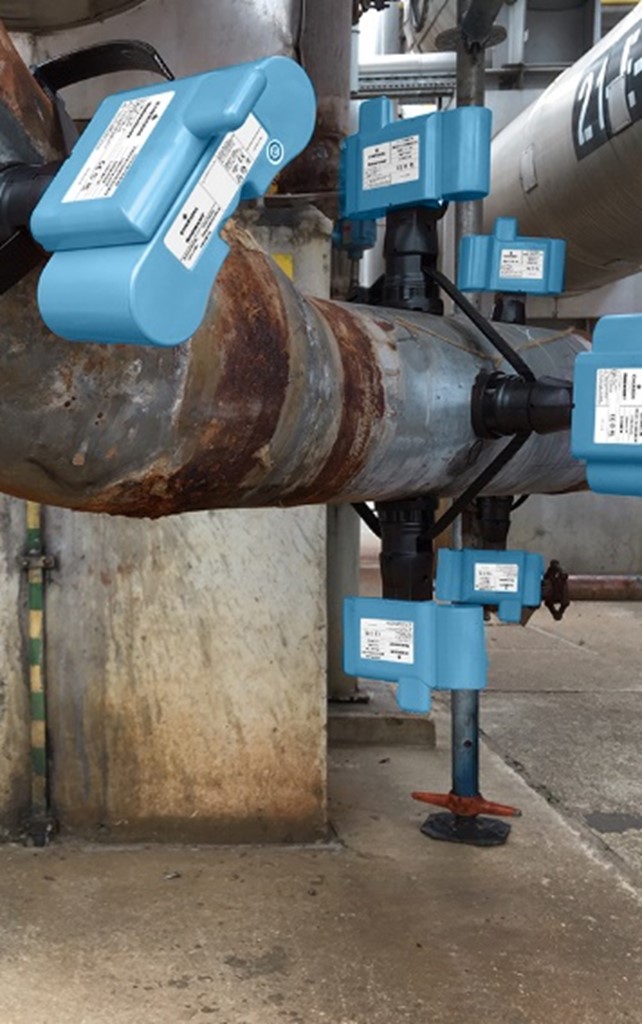 Corrosion and erosion monitoring is one of the most established uses of non-intrusive measurement. Traditional approaches, such as manual ultrasonic thickness checks and intrusive coupons, are well understood, but they are typically performed at infrequent intervals and can suffer from poor repeatability. Measurements may vary depending on technician placement, and different methods often monitor different locations.
As discussed in the webinar, infrequent sampling makes it difficult to distinguish true corrosion acceleration from measurement noise. It can also delay understanding cause and effect when operating conditions change. The result is often reactive maintenance and average performance.
External thickness monitoring changes that dynamic by making repeatable measurements at fixed locations without cutting into the line. Continuous or frequent readings allow teams to see trends in real time rather than relying on historical assumptions. When thickness trends are viewed alongside operating data, corrosion events can be detected earlier, and likely drivers can be investigated with more confidence.
The presenters emphasized that the value is not in data volume alone. Data becomes useful when it supports decisions. With visible trends, teams can prioritize process changes, targeted inspections, or maintenance planning. This approach also supports turnaround planning by helping estimate remaining asset life and schedule work more deliberately.
Temperature Measurement Without Process Penetrations
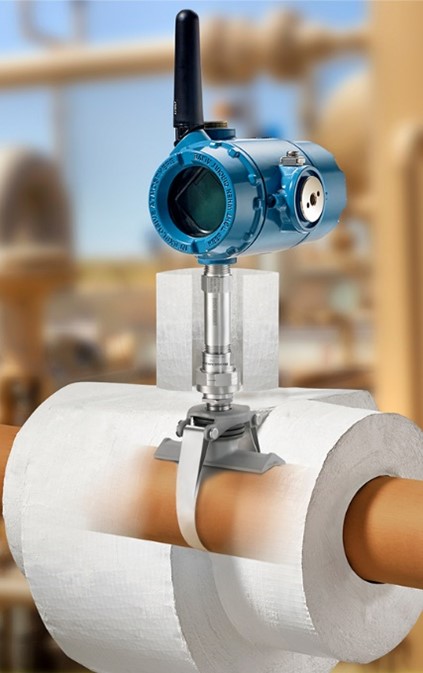 Temperature is one of the most commonly measured variables in a refinery, but adding new temperature points in an operating unit has traditionally required intrusive thermowells. These introduce design complexity, new penetration points, and usually require a shutdown to install.
The webinar described a non-intrusive temperature approach that mounts externally to the pipe and eliminates the thermowell entirely. Using multiple real-time temperature measurements and known pipe characteristics, the system calculates the internal process temperature rather than relying solely on surface readings.
This approach is positioned for monitoring and non-critical control applications. It offers comparable performance to thermowells in many cases and a clear improvement over simple surface measurements because heat loss to ambient conditions is compensated.
Several applications were highlighted, including replacing unreliable thermowells, adding temperature points where no shutdown was planned for years, and using the technology as a universal spare across different line sizes. External mounting also avoids exposure to high pressure, high velocity, or corrosive fluids that often limit the service life of intrusive sensors.
Flow Measurement in Harsh Services
Flow measurement is fundamental to refinery operation, influencing control, energy efficiency, and product quality. Yet harsh services such as heavy residues, dirty streams, and high temperatures create reliability and maintenance challenges for intrusive flow meters. Plugging, pressure loss, and leakage risk frequently limit what can be installed.
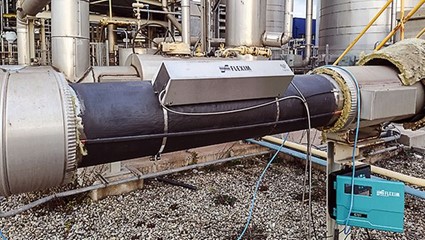 Non-intrusive ultrasonic flow measurement avoids these issues by clamping sensors to the outside of the pipe. The webinar described how many teams begin with portable clamp-on devices for verification and troubleshooting, then transition to permanent installations once confidence is established.
Clamp-on flow measurement was discussed not only for volumetric flow, but also for density and mass flow when combined with external temperature measurement. Because the speed of sound in the process fluid is measured, additional properties can be inferred without penetrating the pipe.
Examples included high-temperature refinery services, particle-laden streams, and steam applications where shutdowns were not an option. In each case, the ability to install measurement points on operating equipment without interrupting production was central to the value.
Where Refineries Are Starting
The closing discussion emphasized that non-intrusive measurement is not experimental. Thousands of these instruments have been installed globally across industries for many years. The decision facing refineries is not whether the technology works, but where it delivers the fastest impact.
Rather than replacing every instrument, the recommended approach is to start small in high-impact areas such as utilities, tank farms, crude and vacuum units, cokers, and heat exchanger networks. Adding five to ten well-chosen points can address safety risks, availability concerns, or high-maintenance areas quickly and build confidence for broader deployment.
The consistent theme throughout the webinar was straightforward: when measurement barriers are removed, better decisions follow.
Watch the webinar for ideas on identifying a set of high-impact measurement gaps in your operation and evaluating where non-intrusive approaches can improve decision-making without adding shutdown risk or maintenance burden. Make sure to also check out the Keys to Improving Safety in Refineries ebook.