
As artificial intelligence continues to reshape data center infrastructure, cooling systems are quickly becoming one of the most critical factors in determining performance, efficiency, and uptime.
A recent article published on Automation.com, Cooling Cannot Run on Guesswork: Day One Measurement Confidence for AI Data Centers, highlights how rising compute densities are forcing a fundamental rethink of how cooling systems are designed, commissioned, and operated.
AI Workloads Are Redefining Cooling Requirements
AI and high-performance computing applications are driving unprecedented increases in rack density and heat generation. Traditional air-cooled environments are being replaced with liquid cooling systems that can support these higher thermal loads.
This shift is not just changing the cooling architecture. It is increasing the importance of instrumentation that validates and controls system performance from the very beginning.
Cooling systems must now deliver consistent thermal performance, high efficiency, and reliable operation at scale. Achieving this requires accurate and continuous insight into how cooling loops are performing under real operating conditions.
Cooling Performance Depends on Trusted Data
As highlighted in the article, advanced cooling systems rely on precise measurement of critical variables such as flow, pressure, temperature, and coolant quality.
Without this data, operators are left making assumptions about system performance, which introduces risk during commissioning and throughout operations.
For example:
- Accurate flow measurement using Rosemount™ Magnetic Flow Meters helps ensure proper coolant distribution across high density racks.
- Reliable pressure monitoring with Rosemount™ Pressure Transmitters supports stable cooling loop control.
- Precise temperature measurement using Rosemount™ Temperature Transmitters provides real-time visibility into thermal performance.
Together, these measurements provide the foundation for operational confidence and system optimization.
Why “Day One” Measurement Confidence Matters
With aggressive project timelines and increasing pressure to bring capacity online faster, data center owners and EPCs cannot afford uncertainty during startup. Instrumentation must deliver immediate accuracy and reliability from day one, enabling:
- Faster commissioning and startup
- Precise cooling loop control
- Reduced troubleshooting and rework
- Confidence in system performance at scale
In these environments, measurement is not just about monitoring. It is about enabling safe, efficient, and predictable operation from the very beginning.
Utilities Are Now a Limiting Factor
As AI pushes infrastructure to new limits, cooling systems and supporting utilities are becoming a potential bottleneck (Figure 1). Systems that were once designed to operate quietly in the background now directly impact:
- Startup speed
- Operating efficiency
- Baseline uptime
This makes it essential to design measurement strategies that provide clear visibility into system performance and ensure the cooling infrastructure can meet evolving demands.
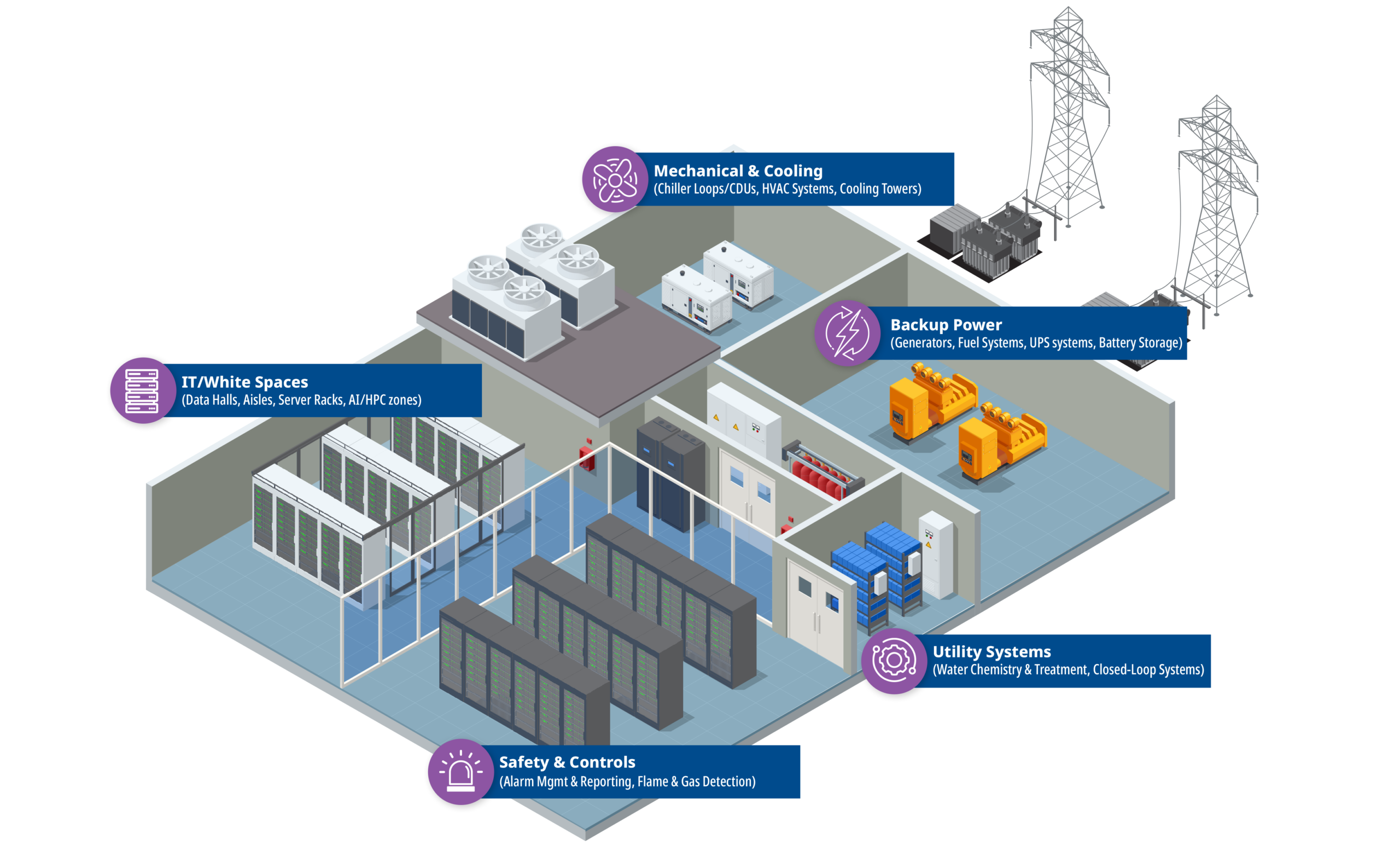
Figure 1. Data center infrastructure includes IT, cooling, power, and utility systems that must operate in coordination to support performance and uptime.
Moving From Guesswork to Confidence
Many data centers continue to add sensors without a clear strategy, which can create more data but not necessarily more insight.
What matters is measurement confidence. Operators need assurance that the data they rely on is accurate, actionable, and aligned with system performance.
By focusing on high quality instrumentation and proper measurement design, teams can shift from reactive troubleshooting to predictable and optimized cooling performance.
To learn more about how Emerson supports measurement confidence in data center cooling applications, visit: https://www.emerson.com/en/measurement-instrumentation/industries/data-centers