
TL;DR
- Continuous vibration monitoring identifies failures earlier than many traditional methods.
- Workforce shortages are accelerating adoption of permanent monitoring solutions.
- Criticality assessments help teams prioritize the right assets first.
- Industrial AI transforms raw asset data into actionable insights.
- Scalable reliability programs start small and expand based on measurable results.
Why this matters now
One of the primary benefits of vibration sensors like Emerson’s AMS Wireless Vibration Monitor is their ability to detect common mechanical problems before they appear through other indicators such as temperature, pressure, or process changes. PeakVue™ technology filters out traditional vibration signals and focuses on impacting, providing some of the earliest indications of developing asset health issues.
Emerson’s Joe Petersen explores the value of vibration monitoring in a recent interview with Chemical Processing magazine. Petersen explains that workforce shortages are making it increasingly difficult for reliability teams to maintain visibility into asset health through traditional maintenance routes.
“Now that it is easier and more affordable, teams can put permanent sensors on equipment for continuous monitoring, freeing them up for more valuable tasks than walking around the plant to collect data, he suggested.”
This shift allows organizations to collect more reliable data while making better use of limited maintenance resources.
Takeaway: Continuous monitoring helps reliability teams detect problems earlier while reducing reliance on manual data collection.
Permanent monitoring also makes it much easier to gain visibility into stranded assets located in remote or hazardous environments, where regular inspection rounds can be difficult, costly, or risky.
Areas of need are the best starting points
One of the biggest challenges organizations face when implementing a vibration monitoring strategy is determining where to begin.
The same workforce shortages driving adoption often leave teams without the experience needed to design a highly effective reliability program. This is why partnering with an experienced automation solutions provider can be valuable. Such partners can help conduct criticality assessments that identify where monitoring investments will have the greatest impact. Petersen explains:
“Understanding how the equipment fails and what measurements will detect those failures at the earliest point in time can make a significant difference.”
This approach helps organizations focus resources where they will deliver the greatest operational value.
Takeaway: Criticality assessments help teams prioritize assets that pose the greatest operational risk.
A criticality assessment can identify equipment whose failure would have the most significant production impact. It can also uncover recurring maintenance challenges and “bad actor” assets that warrant additional monitoring attention. These early successes help organizations demonstrate value and justify future expansion.
Takeaway: Starting with high-impact assets creates early wins that support long-term program growth.
Taking the next step
Once vibration monitoring is in place, organizations can unlock additional value by combining asset health information with process data.
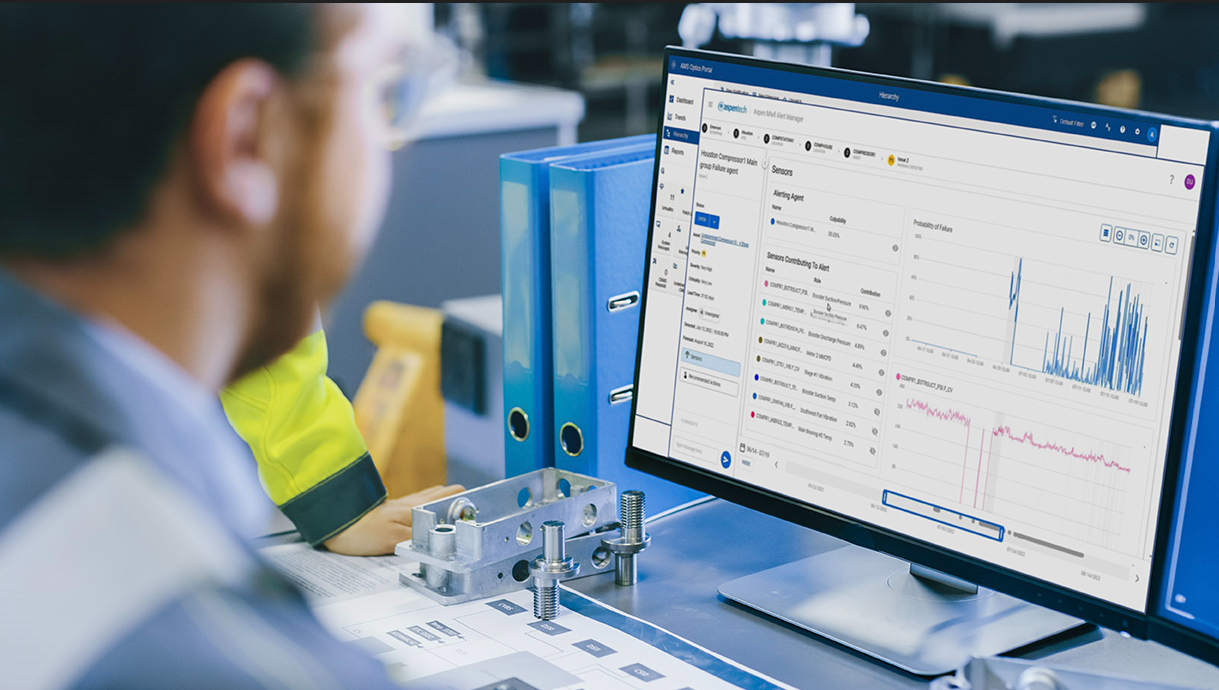
Tools such as AMS Machine Works and AMS Optics allow teams to integrate multiple sources of information and generate more complete operational insights. These platforms also provide AI- and machine learning-assisted diagnostics that help transform raw data into actionable recommendations.
This reduces the burden on reliability specialists while helping teams respond faster and more effectively to emerging issues.
Takeaway: Combining vibration and process data provides deeper insight into equipment health and performance.
Petersen notes that the most successful AI initiatives often leverage capabilities already embedded in trusted reliability platforms rather than introducing disconnected third-party tools.
“Rule-based, AI-driven analytics has been part of machinery health software for many years already. The industrial AI tools built into trusted automation solutions are built on decades of industry expertise and failure modes and effects analysis data, along with first principles guardrails that keep them safe and effective.”
This combination of proven industry expertise and AI-driven analytics helps organizations make better decisions without sacrificing confidence or trust.
Takeaway: Industrial AI delivers the greatest value when it builds on proven reliability expertise and established workflows.
Building the foundation for future reliability
As industrial AI continues to evolve, organizations are increasingly recognizing that continuous monitoring, advanced analytics, and predictive maintenance are becoming essential competitive differentiators.
The most effective reliability programs do not begin with massive deployments. They begin with critical assets, measurable objectives, and technologies that make it easier to turn data into action. Over time, those programs can scale into broader predictive maintenance strategies that improve efficiency, increase throughput, and support long-term sustainability goals.
Takeaway: Building a reliability foundation today creates the roadmap for future operational excellence.