
Chemical manufacturers are under growing pressure to improve safety, reliability, productivity, and sustainability while operating aging facilities with limited maintenance windows. In a recent Chemical Processing Distilled podcast, Emerson’s Michael Machuca discussed how non-intrusive measurement technologies can help plants gain critical process and asset health insights without shutting down production.
Why It Matters
 Many industrial facilities were designed years ago when energy costs, sustainability goals, and emissions reduction initiatives were not as prominent as they are today. As a result, plants often operate with measurement gaps that limit visibility into critical processes and assets. According to Michael, organizations cannot improve what they do not measure, making accurate and accessible process data a foundational requirement for operational improvement.
New measurement technologies, combined with wireless communications, make it easier and more cost-effective to add measurement points that may have been impractical or prohibitively expensive in the past. This improved visibility can help operations teams make faster decisions while providing maintenance and reliability personnel with greater insight into asset performance.
Key Takeaways
- Plants often have measurement gaps because adding instrumentation traditionally requires shutdowns, piping modifications, wiring, and significant installation costs.
- Non-intrusive instruments collect data without penetrating pipes or vessels, reducing installation complexity and process disruption.
- Common non-intrusive applications include flow, temperature, corrosion and erosion monitoring, and acoustic monitoring.
- Additional measurement points can improve safety by reducing manual inspections, identifying abnormal conditions sooner, and supporting regulatory compliance.
- Better measurement visibility supports uptime by helping identify issues such as fouling, plugging, corrosion, and erosion before they impact operations.
- Digital transformation initiatives depend on quality data, making expanded measurement coverage an important enabler for advanced analytics and artificial intelligence applications.
Why Measurement Gaps Still Exist
Many operations teams know where additional measurements would be valuable, but installing traditional instrumentation is not always practical. Michael explained that adding a new measurement point often requires shutting down equipment, cutting into process piping, installing power and wiring infrastructure, and coordinating installation during a maintenance outage. These factors can delay projects for months or even years.
Non-intrusive measurement technologies provide another path forward. Because they can often be installed without cutting into process lines or interrupting production, facilities can gain access to important operational data much sooner. This allows organizations to address safety, reliability, and energy-efficiency challenges without waiting for major shutdowns or capital projects.
Understanding Non-Intrusive Measurement Technologies
At its simplest, a non-intrusive measurement does not physically contact the process fluid. Instead of penetrating a pipe or vessel, the device measures from outside the process boundary. This approach can be particularly beneficial in applications involving corrosive chemicals, high temperatures, high pressures, or extremely clean process requirements.
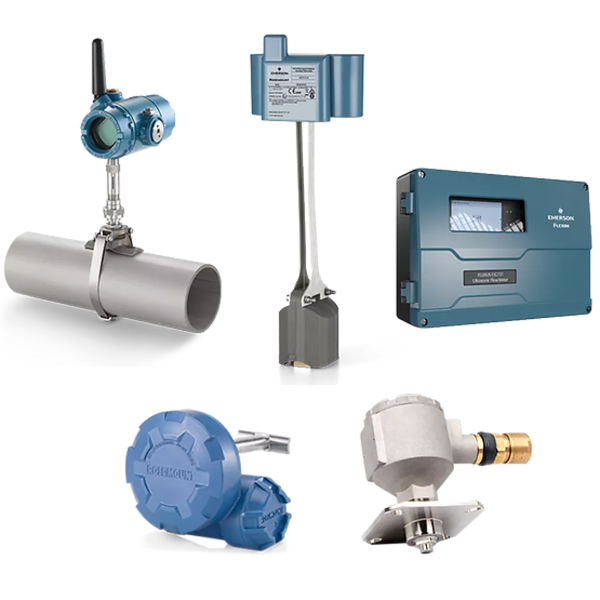
Among the most widely used technologies are clamp-on ultrasonic flow meters, such as Flexim Ultrasonic Flow Meters, which can measure liquids, gases, and steam. Because these instruments are mounted externally, they avoid many material compatibility and pressure-containment concerns associated with traditional inline devices.
Michael also highlighted non-intrusive temperature measurement solutions, such as Rosemount X-well Technology, that mount on the outside of a pipe and calculate process temperature using surface measurements and specialized algorithms. These devices can simplify installation while avoiding challenges associated with thermowells in demanding operating conditions.
Improving Safety, Reliability, and Compliance
One of the biggest advantages of non-intrusive instrumentation is its ability to reduce installation risk. Because personnel do not need to cut into process piping, potential exposure to hazardous, corrosive, or flammable materials can be reduced. Non-intrusive technologies also eliminate additional leak points that traditional installations would otherwise introduce.
Corrosion and erosion monitoring, such as Rosemount Wireless Corrosion and Erosion Monitoring Solutions, is another area where non-intrusive technologies can provide significant value. Sensors mounted externally can continuously measure pipe wall thickness, helping organizations identify metal loss and potential containment issues before they become serious problems. This provides a more continuous view than periodic manual inspections or coupon-based methods.
Acoustic monitoring applications using Rosemount 708 Wireless Acoustic Transmitters can also support both safety and compliance objectives. These devices can detect pressure relief events, helping facilities meet monitoring requirements and respond more quickly to operating abnormalities. Acoustic technologies can also identify leaking steam traps, creating opportunities to improve energy efficiency by reducing steam losses.
Supporting Digital Transformation Through Better Data
As organizations invest in advanced analytics, artificial intelligence, and digital transformation initiatives, the quality and availability of field data become increasingly important. Michael noted that these technologies depend on accurate information from the field to deliver meaningful results. Without sufficient measurement coverage, even the most advanced analytics platforms have limited value.
For facilities evaluating where to begin, Michael recommends focusing first on operational challenges rather than specific technologies. Areas with limited visibility, excessive manual inspections, recurring maintenance issues, or opportunities to reduce energy consumption often represent strong candidates for additional measurements. Bringing together operations, maintenance, reliability, and safety teams can help identify the highest-value measurement gaps and determine the best approach for closing them.
Learn More About Non-Intrusive Measurement Technologies
Closing measurement gaps does not always require a plant shutdown, major piping modifications, or extensive capital investment. As Michael explained, non-intrusive measurement technologies can help chemical manufacturers improve visibility into critical processes and assets while supporting safety, reliability, energy efficiency, sustainability, and regulatory compliance. Whether the challenge is monitoring flow, temperature, corrosion, erosion, or pressure relief events, these technologies offer practical ways to gain the data needed to make better operational decisions.
To hear the full discussion, listen to the Chemical Processing Distilled podcast episode, “Closing Measurement Gaps Without Shutting Down the Plant.”
To learn more about Emerson’s solutions for non-intrusive measurement applications, visit the Non-Intrusive Measurement Instrumentation section on Emerson.com.