
pharmaceutical and biopharmaceutical manufacturers, quality control (QC) testing laboratories play a critical role in ensuring that raw materials, supplies, intermediates, and final products are safe, effective, and ready for release. Yet many organizations still rely on spreadsheets, disconnected systems, and manual coordination to manage increasingly complex testing schedules, creating bottlenecks that can delay production and batch release.
Why It Matters
Life sciences manufacturers operate in an environment where product quality, regulatory compliance, and operational efficiency must all be managed simultaneously. QC labs sit at the center of these demands, managing sample testing, analyst assignments, equipment availability, and regulatory hold points while responding to constantly changing manufacturing conditions.
When QC scheduling is disconnected from production schedules, delays, inefficiencies, and coordination challenges can ripple throughout the facility. Real-time scheduling helps eliminate those gaps by synchronizing manufacturing and laboratory activities, so both teams work from the same, current, real-time, up-to-date information.
Key Takeaways
- QC scheduling remains one of the most manual and fragmented processes in many pharmaceutical facilities.
- Real-time scheduling continuously adjusts to changing production conditions rather than relying on static schedules.
- Automated assignment of analysts and equipment helps optimize resource utilization and reduce manual effort.
- Synchronizing QC and manufacturing schedules can accelerate batch release and improve throughput.
- Automated scheduling controls help reduce coordination-related deviations and support compliance requirements.
The Hidden Cost of Manual QC Scheduling
QC laboratory scheduling is inherently complex. A single batch may require multiple tests, specialized equipment, qualified analysts, and strict timing requirements. At the same time, laboratories must manage changing sample volumes, instrument availability, analyst qualifications, and unexpected events such as equipment failures or priority changes.
Many facilities still manage this complexity using spreadsheets, whiteboards, or standalone scheduling systems. The problem is that these tools create only a point-in-time view of operations. Once production schedules change, a batch is delayed, or equipment becomes unavailable, the schedule quickly becomes outdated. Supervisors and analysts must then spend valuable time manually updating plans and coordinating changes.
This approach often creates bottlenecks unrelated to analytical capacity. Samples can accumulate at heavily used instruments while other resources remain underutilized. Analysts may wait for reassignment, and lab leaders may make decisions based on outdated information.
Moving From Reactive to Real-Time Operations
Modern manufacturing requires a different approach. Instead of relying on static schedules, real-time scheduling continuously updates as conditions change across the facility. Schedulers, supervisors, and managers gain an up-to-date view of tasks, resources, and batch status without manual intervention.
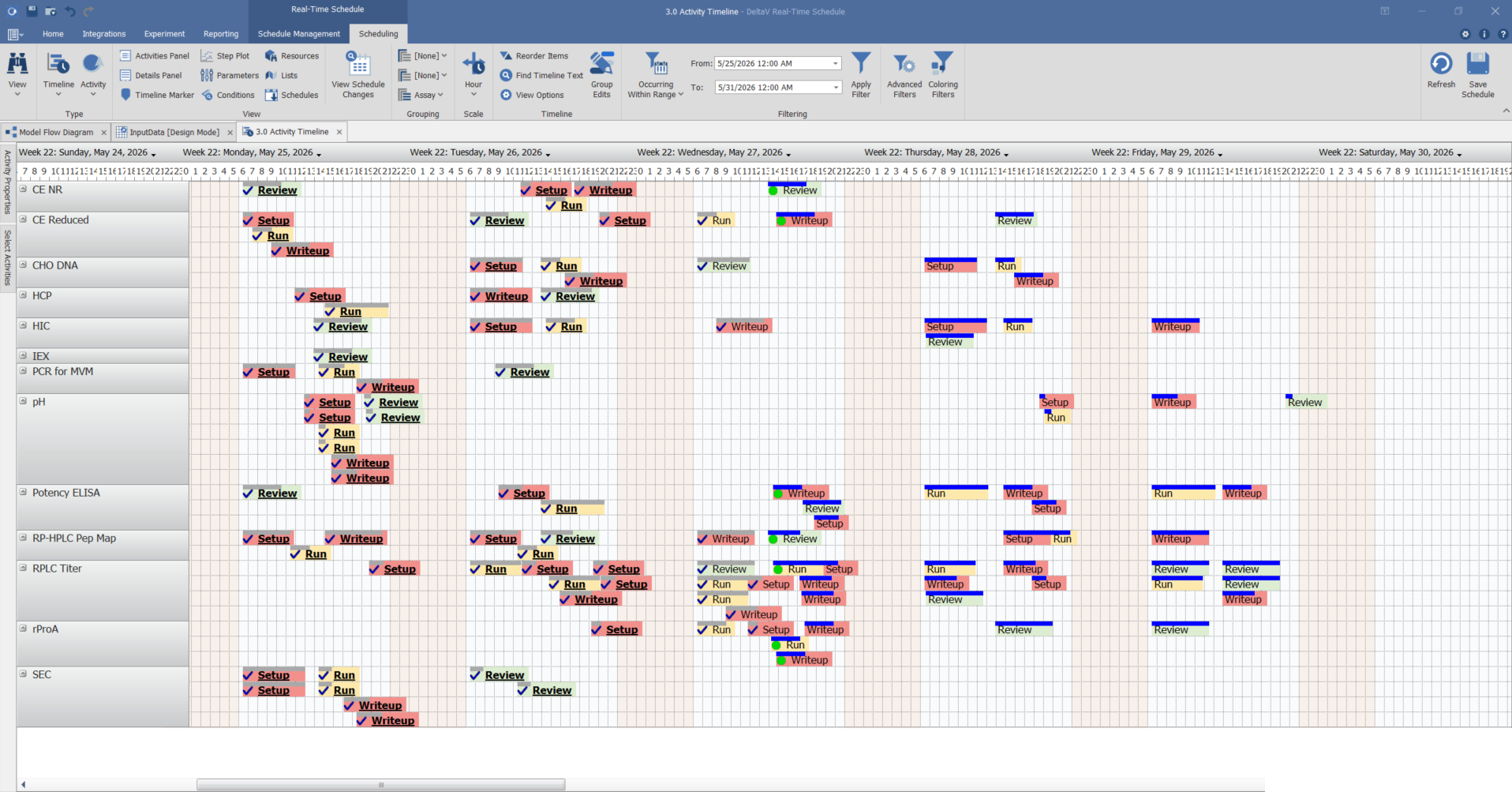
With DeltaV™ Real-Time Scheduling, schedules can automatically reflect changes in production plans, equipment availability, and labor resources. The system can assign work based on analyst qualifications, equipment status, and operational priorities while continuously optimizing resource utilization.
For process engineers and manufacturing leaders, this means less time coordinating activities and more time focusing on improving process performance. For quality organizations, it means greater confidence that testing activities remain aligned with manufacturing priorities.
Where the Greatest Value Is Created
The greatest benefit comes from directly connecting QC scheduling to manufacturing operations.
In many facilities, production and QC teams operate separate schedules that must be manually synchronized. Any production change requires phone calls, meetings, and spreadsheet updates before the laboratory can react. This creates what many organizations know all too well: a coordination burden that consumes resources without adding value.
When QC scheduling is integrated with manufacturing systems, laboratory teams can respond immediately to changing production demands. An early batch completion can trigger preparation for incoming samples, while a production delay can automatically free resources for other priorities. Teams throughout the facility operate from a single synchronized view rather than relying on manual communications.
This synchronization can speed batch release by ensuring testing occurs at the right time and aligns with manufacturing milestones. It can also reduce delays associated with test-related process holds, testing bottlenecks, and resource conflicts.
Supporting Compliance While Improving Efficiency
Efficiency is important, but it cannot come at the expense of compliance.
Real-time scheduling systems can automate scheduling rules and resource checks to help ensure analysts are assigned according to qualifications, instruments are available and calibrated, and critical timelines are monitored proactively. When potential issues arise, alerts can be generated before compliance risks become deviations.
By reducing coordination-related errors, manufacturers can spend less time investigating avoidable issues and more time delivering products to patients. The result is an operation that ensures quality and compliance while enabling efficient operations, without forcing tradeoffs between them.
Learn More
For pharmaceutical and biopharmaceutical manufacturers, the QC laboratory is no longer just a support function. It is a critical component of production performance, batch release readiness, and regulatory compliance. Real-time scheduling helps transform the QC lab from a reactive bottleneck into a proactive partner that supports operational excellence across the facility.
Learn more about ways to drive greater process efficiency with DeltaV™ Real-Time Scheduling.
