
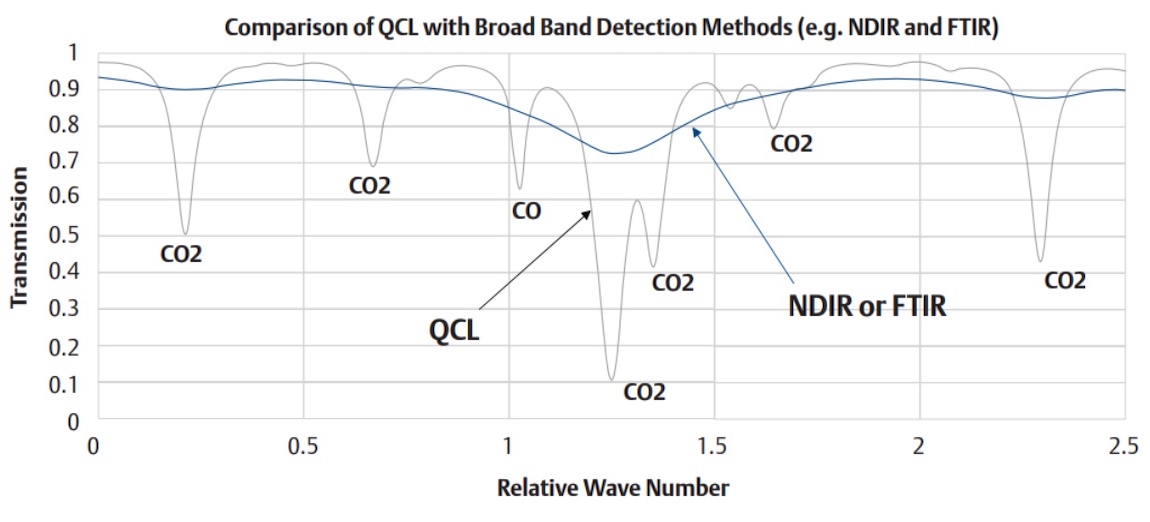
There was a time when an engineer tasked with assembling a continuous emissions monitoring system (CEMS) for a combustion-based power plant or in-house generating unit would be stuck selecting a specialized analyzer technology to match every pollutant subject to regulation. In some cases it might not be quite that bad, but there were few analyzers capable of measuring more than one gas. The result was a complex and very costly collection of several analyzers, each possibly with its own sampling mechanism, operational quirks, and maintenance requirements.
Time and technical improvements have addressed this issue, while making improvements in other areas. Emerson has been in the forefront of developments across multiple technologies, and one area with particular success is laser absorption spectroscopy. The ways this can be applied for CEMS is the topic of my article in Power Engineering Factor This, New Gas Analyzer Technologies Simplify Emissions Monitoring Systems.
The ultimate desire for plant operators is a single analyzer technology capable of measuring every pollutant with one unit. Unfortunately, there is no single analyzer technology yet capable of measuring all common analytes simultaneously. But fortunately, that limitation does not preclude using more than one technology in a single unit, such that they can share a single extraction mechanism. This alone is a major advance to reduce the need for a larger population of single-purpose analyzers, and this modular approach to configuring analyzers enables the best fit technology to be selected for each gas requiring monitoring.
As just mentioned, Emerson’s answer is laser absorption spectroscopy because this technique is very well suited to the gases covered by most CEMSs. This is the underlying technology in Emerson’s Rosemount™ QX1000 Continuous Gas Analyzer, where each specific gas measuring unit is a module within a single enclosure.
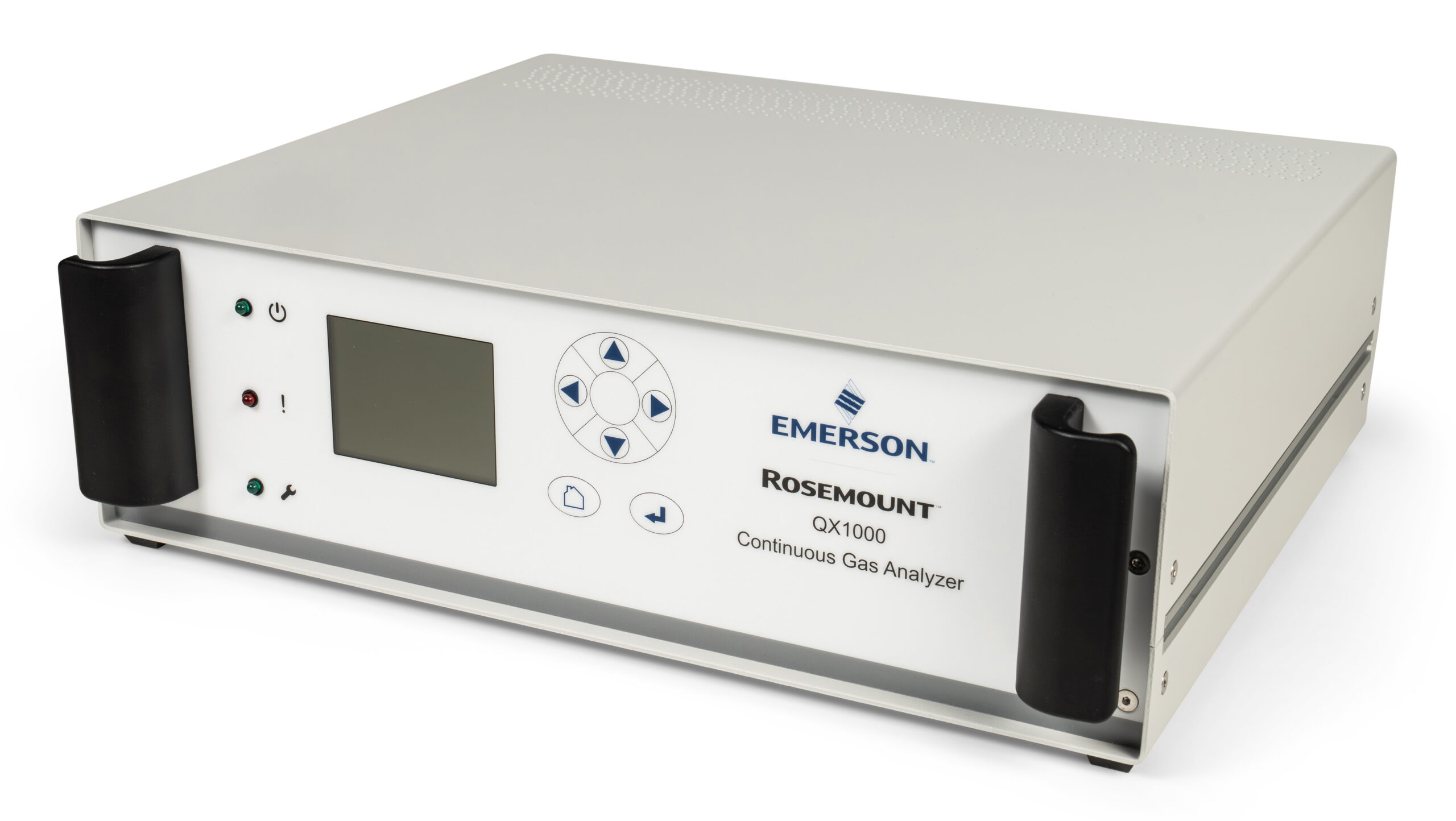
Rosemount QX1000 Continuous Gas Analyzer can include up to three of these laser modules in a self-contained measurement bench containing all the necessary electronics, detectors, and sample cells to measure gases such as NO, NO2, CO, CO2, and SO2. Depending on the configuration, the laser bench can measure one to four gases, and it can be supplemented by an additional paramagnetic measurement bench to measure O2.
This customizable hybrid system is designed to deliver highly accurate, continuous, multi-component gas analysis, all in a single unit with a single sampling mechanism. This delivers optimal process monitoring, along with opportunities for control, in compliance with the stringent requirements of diverse applications, setting a new industry standard in gas analysis solutions. The article supplies more technical detail, including two actual case studies where the company was able to use this approach to best advantage.
At the same time, keep in mind that while the QX1000 is exceptional for its purpose, there are far more complex applications, and Emerson has more complex Rosemount™ analyzers using the same basic concepts for these situations:
- Rosemount™ CT5100 Continuous Gas Analyzer is the first hybrid, laser-based analyzer developed for process gas analysis and emissions monitoring. It combines quantum cascade laser (QCL) and tunable diode laser (TDL) technologies with up to six lasers to measure up to 10 gas components.
- Rosemount™ CT5450 Continuous Gas Analyzer is also a hybrid QCL and TDL analyzer. It expands gas analysis to both the near and mid-infrared range, covering many gas species and providing fast response time and sub-parts per million gas analysis.
- Rosemount™ X-STREAM Enhanced XEGP Continuous Gas Analyzer measures up to five components simultaneously in various combinations. Its versatile design allows physical benches to be installed in their own compartment, separate from the electronics.
Whatever the case, Emerson can configure an analyzer to the specific needs of the application.
To regulatory bodies around the world, continuous operation of a CEMS is paramount. If fuel is burning, the CEMS must be working or the facility will be liable for fines, shutdowns, and possibly exposure to litigation and other penalties. Worse, if production must stop due to an unscheduled analyzer outage, revenue will be lost. To address the mandated availability and data quality, newer designs now provide the ability to combine multiple measurement technologies in a single unit, a world’s first.
For more information, visit Emerson’s Gas Analysis pages at Emerson.com.