
The ability to accurately and reliably measure the level of stored solids materials such as powders, grains and pellets is vital for effective inventory management and preventing safety incidents across the process and manufacturing industries. This subject is addressed in a Hazardex magazine article, ‘Why Level Measurement is Critical to Storing Solids Safely’. In the article, I explain the various challenges associated with solids level measurement, the appropriate technologies to implement, and the benefits this can achieve for end users in terms of both operational efficiency and safety.
Level Measurement of Solids
Accurate solids level measurement is typically more challenging than measuring liquid levels, and these challenges have direct safety implications. Because solid materials vary greatly in composition, particle size, density, moisture content and flow behaviour, they are inherently more complex to manage than liquids. Solids are often stored in large quantities, amplifying the challenges of achieving accurate and reliable level measurement. Unlike liquids, solids do not naturally form a level surface, and their behaviour can change depending on conditions such as humidity and temperature. During storage, materials may compact or adhere to vessel walls, which can impact level measurement accuracy. In addition, airborne dust and the low dielectric constants of many solids can weaken measurement signals, interfering with reliable level detection and increasing the risk of safety incidents.
Overfills and Spills
The article explains that an overfill, causing material to spill from a vessel, is one of the most potentially dangerous issues associated with solids storage. Falling material can injure people, damage equipment or block access routes, and rapidly accumulated spillage increases slip, trip and fall risks. Overfills can also allow dust to escape, increasing the likelihood of respiratory exposure or ignition hazards. Overfill risk must be addressed through multiple independent protection layers, including high-level switches, continuous level measurement, basic process control system (BPCS) interlocks and emergency containment measures.
Equipment Overload
As solid material accumulates, it can compact and exert uneven lateral pressures on vessel walls. Overfilling exacerbates these forces and may overload feeders, screw conveyors, rotary valves and discharge gates. Mechanical components operating under excessive load are more likely to fail, potentially releasing material suddenly or generating ignition sources. In extreme cases, structural deformation or vessel collapse has occurred due to prolonged overloading or poor understanding of actual material levels. The forces generated by compacting materials can also affect instrumentation. For example, guided wave radar level transmitter probes may be subjected to bending, tensile or dragging forces as material settles or moves during filling and discharge. These considerations must be addressed during instrumentation design and installation.
Dust Risks
Dust generation does not only lead to serious respiratory hazards and reduced visibility. When combined with oxygen and an ignition source, dust clouds can also lead to flash fires or explosions. The article states:
…Even a minor overfill or uncontrolled discharge can increase dust concentrations, raising the likelihood of ignition from static electricity, hot surfaces or mechanical sparks. Accumulated dust layers on beams, ledges and equipment can create secondary explosion hazards if disturbed during maintenance or abnormal operation. Dust and electrostatic charges can also affect level measurement accuracy and reliability. High dust concentrations may attenuate signals, create false echoes or cause coatings to form on sensor surfaces. Over time, dust or static can trigger false readings or signal loss, making robust instrument selection critical.
Irregular Flow
Solids do not always flow reliably and many materials can form stable arches or bridges above discharge points, preventing flow while material still accumulates above. Ratholing may occur when material flows only through a central channel, leaving stagnant material along the walls. These irregular flow patterns can mislead operators into thinking there is more available capacity than there actually is, increasing overfill risk. Clearing blockages often requires manual intervention, exposing personnel to confined-space hazards and falling material. Reliable level measurement in these applications depends on selecting technologies capable of coping with irregular material profiles and non-uniform flow behaviour.
Automated Level Measurement
Accurate and reliable information about material levels helps organisations prevent overfilling, protect equipment and identify abnormal conditions before they escalate. Automated level measurement reduces the need for manual inspection, which often involves climbing silos, opening hatches or entering confined spaces. It also enables faster response times, as alarms can alert operators promptly and interlocks can initiate automatic protective actions when unsafe levels are detected. While level measurement does not replace dedicated explosion protection measures, it plays a critical preventative role by keeping material levels within defined operating limits and helping avoid conditions that lead to excessive dust generation.
Point Level Detection
Technologies such as vibrating fork and vibrating rod switches, rotary paddle switches and capacitance switches are widely used in solids applications to indicate when material reaches a predefined point. High-level switches are commonly installed near the top of silos to prevent overfills, while low-level switches protect discharge equipment from running empty or drawing in air. When activated, point level devices can generate alarms or directly stop filling operations, providing an immediate safeguard against unsafe conditions. While some device designs may be prone to caking in dusty environments, others incorporate self-cleaning features to minimise build-up and maintain reliable operation.
Continuous Level Measurement
While point level devices provide critical protection, continuous level measurement offers a broader view of material behaviour. Knowing not just when a limit is reached, but how the level is changing over time, allows operators to manage filling rates, anticipate issues and optimise inventory management. As I explain in the article:
…Radar-based technologies have become increasingly important for continuous solids level measurement. Non-contacting radar instruments transmit electromagnetic signals that reflect from the material surface, enabling measurement without physical contact. This makes them well suited to abrasive, dusty or high-temperature applications. Guided wave radar level transmitters provide a higher signal return than non-contacting radar due to direct switching technology, which increases measurement reliability in very tall silos containing low reflective materials. Using a probe to guide the signal into the vessel, guided wave radar devices provide stable measurements even in challenging conditions. Guided wave radar probes can be designed and installed to withstand the mechanical forces associated with heavy or compacting materials.
Advances in signal processing allow modern radar instruments to distinguish transient dust clouds from the true material surface, reducing false readings. In applications with extreme dust formation, guided wave radar offers the highest signal strength, while non-stick antenna materials and air-purging can mitigate heavy dust accumulation. Advanced radar devices can also cope with uneven and changing surface profiles caused by bridging and ratholing. Robust grounding, insulation and intrinsically safe designs minimise the impact of electrostatic discharges.
To learn more about Emerson’s Rosemount solids level measurement portfolio, visit www.Emerson.com/RosemountSolidsLevel.
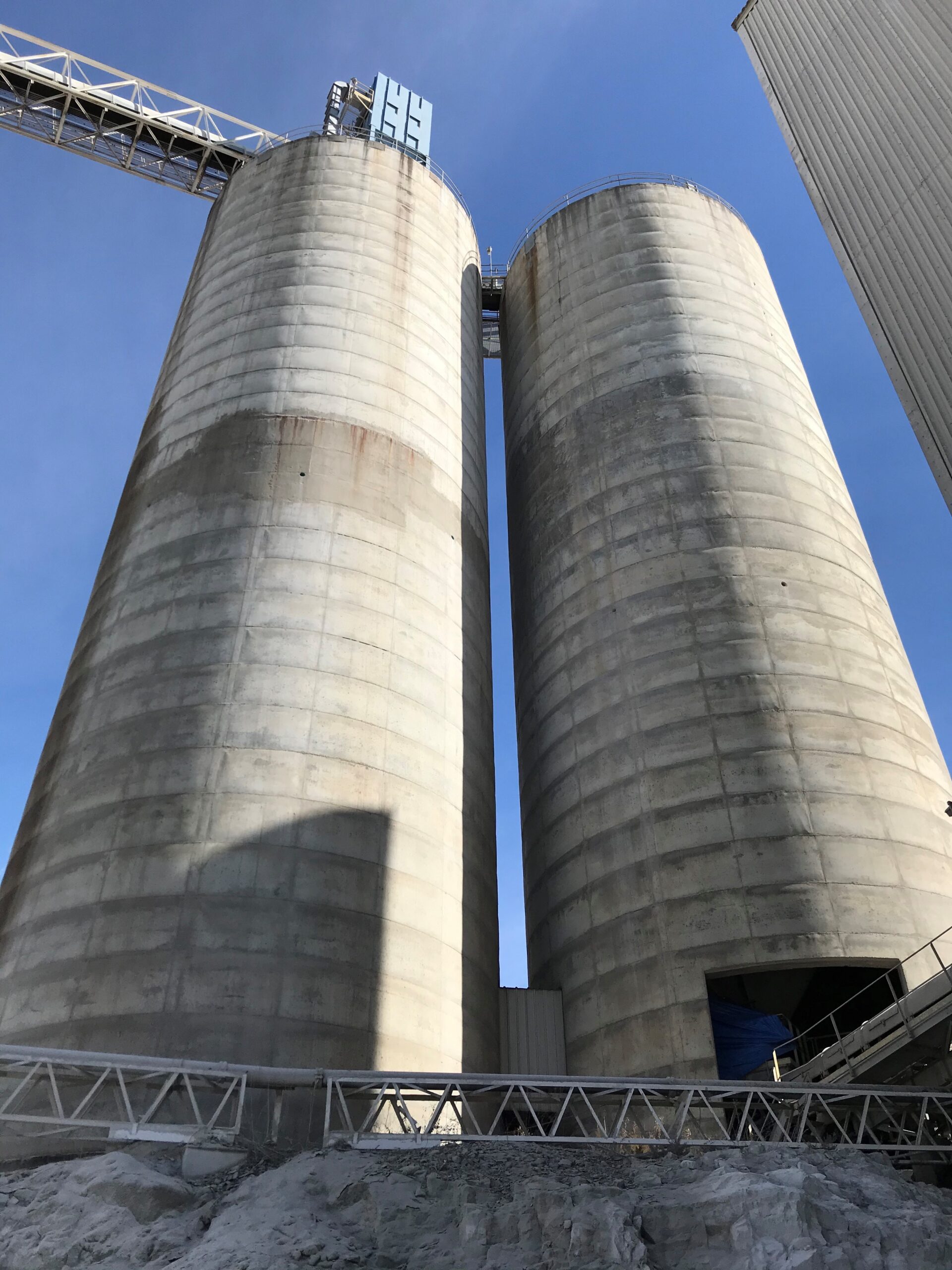
Solids storage vessels can be tens of metres tall and hold thousands of tonnes of material, which amplifies the challenges of achieving accurate and reliable level measurement.
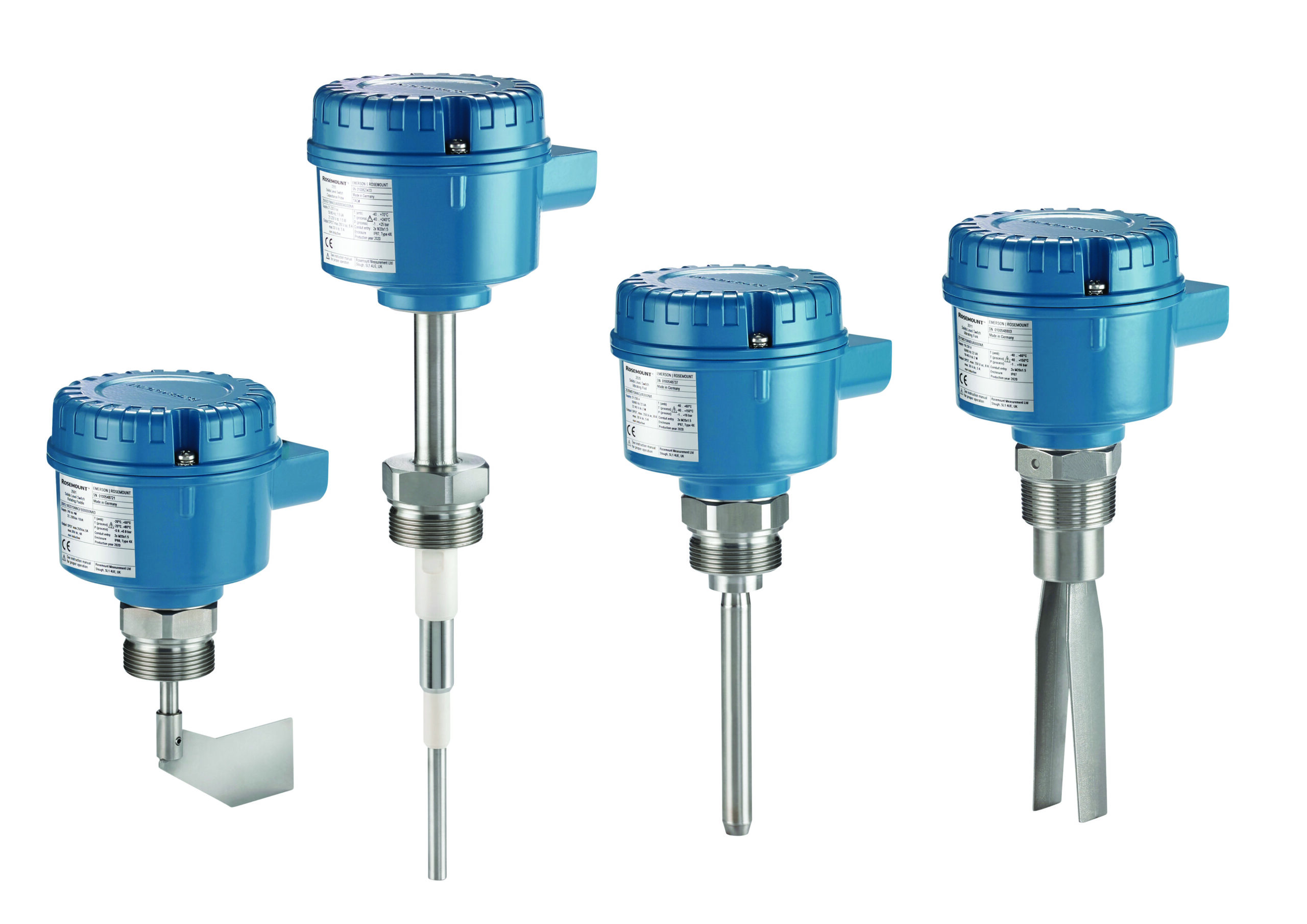
The paddle, capacitance, vibrating rod and vibrating fork switches in Emerson’s Rosemount™ level switches portfolio ensure reliable monitoring of solid materials.
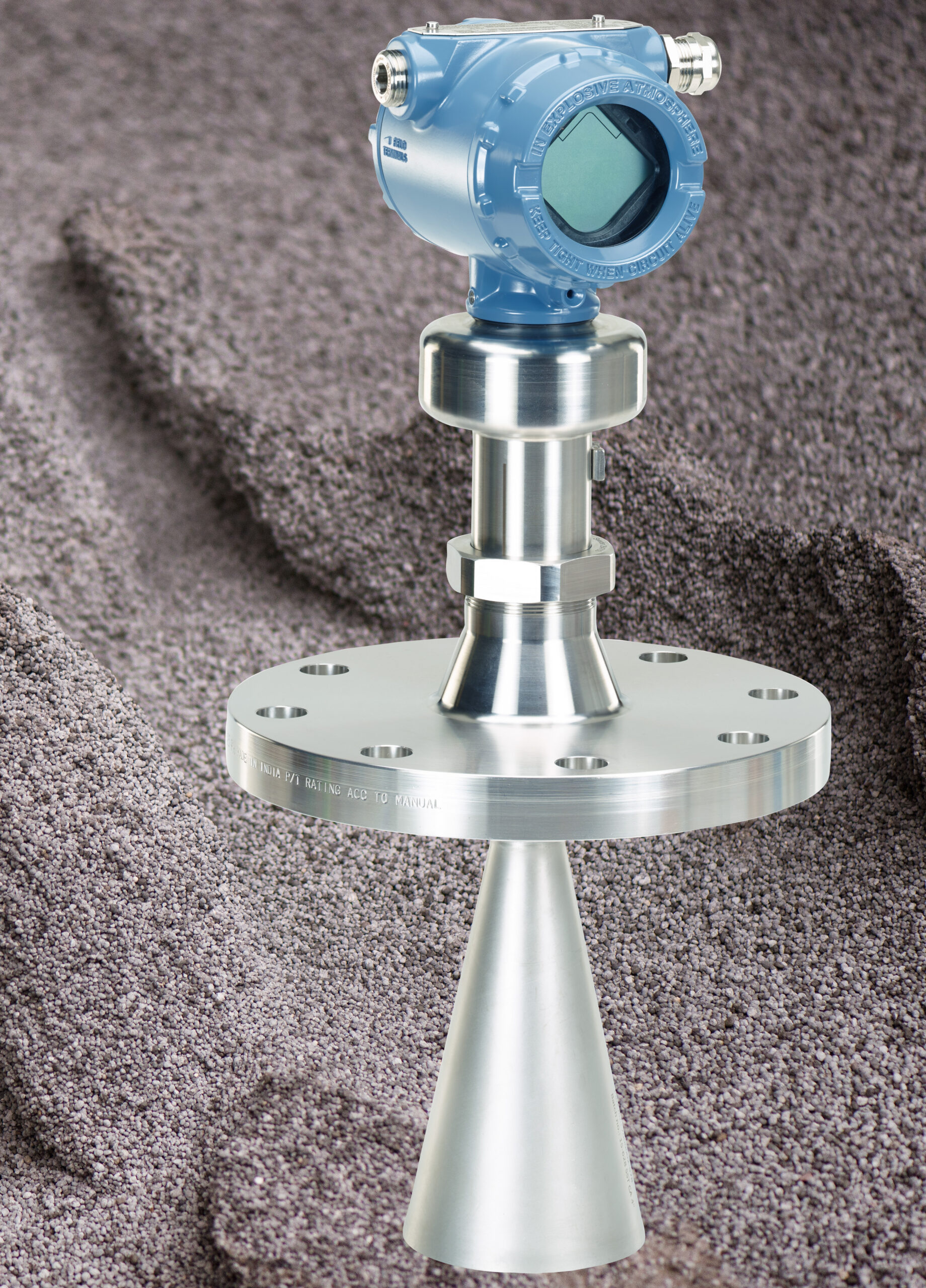
The Rosemount™ 5408 Level Transmitter from Emerson is a non-contacting radar device that provides accurate solids measurements and is safety certified to IEC 61508 for SIL 2 applications.