
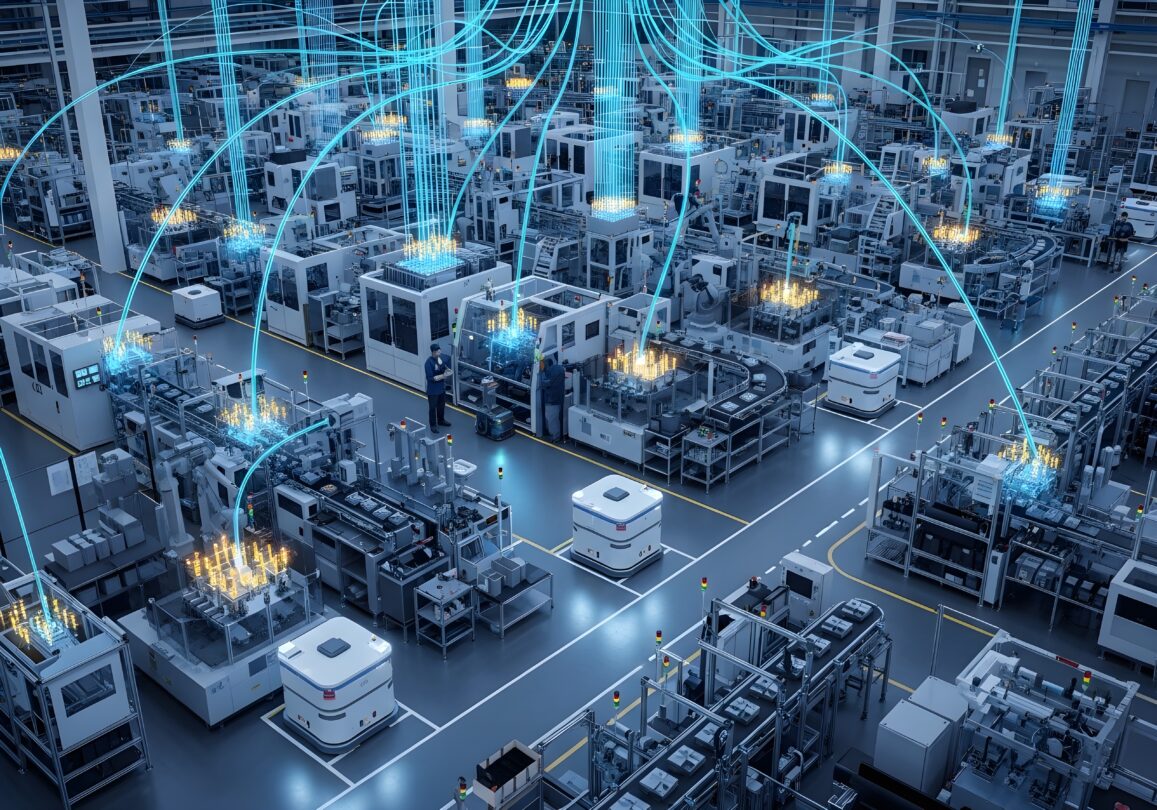
The industrial edge is changing.
For years—maybe decades—the industrial edge has been defined as the site where operations happen. The hardware and computing systems closest to assets are critical, but they are not everything the edge can be.
As Claudio Fayad explains in a recent article in Smart Industry, the edge environment is where the next generation of automation is happening:
“The modern edge is not just a buzzword, but rather an architecture born of new technologies—many of which originated in the cloud—that can seamlessly manage, provision, and connect all the deployed computer capacity installed on-prem as part of a comprehensive enterprise operations platform. Under such a definition, the edge becomes an area of untapped potential that will fundamentally redefine automation in the coming years.”
A more modern edge
Today, the edge has evolved into the modern edge environment. The DeltaV™ Edge Environment is a critical part of a modern, Boundless Automation vision for data mobility, providing secure data egress from the DeltaV Distributed Control System (DCS) to other edge nodes and the cloud. Gone are the days when the DCS must be isolated— air gapped from any other system, locking away valuable data. Today’s DCS software can use the secure edge environment to move contextualized data seamlessly to the people and applications that need it.
This new, seamless integration of data is breaking down the data silos created by the traditional edge and helping organizations build a unified, holistic automation ecosystem across their plants and even across their enterprise. This is the foundation of the emerging Enterprise Operations Platform—the next-generation automation system that will fundamentally redefine operations for decades to come.
But that’s just the beginning.
As the edge environment continues to evolve, it is becoming part of something bigger: a nesting spot for a wide array of technologies that used to be unique to the cloud. The edge environment will provide controllers, servers, and hosts that used to be air gapped and isolated with connectivity to modern software technologies like containerization, Kubernetes, fleet management, centralized provisioning, and more. And as the capabilities continue to grow,
“These edge-driven, seamless automation platforms will do more than just drive innovation and help teams make better business decisions; they will also support the software-defined architectures that will provide more flexibility and capacity to existing automation solutions.”
A next-gen automation future
Many of the most exciting capabilities made possible by edge environments are still on the horizon. The core technology is ready today, and it provides significant benefit. Incorporating the DeltaV Edge Environment as part of a modernization project allows teams to start breaking down data silos by bringing contextualized data out of the control system and into industrial AI, analytics, reliability tools, and more. Simultaneously, creating a more powerful and unified edge helps teams prepare for the seamless connectivity that will be a core competency of the next-generation automation platform. It’s the best of both worlds: a technology that delivers quantifiable value today while laying the groundwork for future-proofed operation in the decades ahead.