
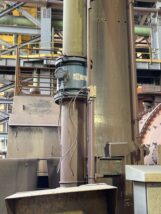
 Mining companies tend to face a compounded set of challenges: Mines are frequently located in arid locations, while at the same time mining operations processing require a lot of water. These challenges leave mine operators looking for ways to optimize their processes so they can make the most of what little water is available. Even in locations where water is abundant, companies always strive to optimize water use because of other competing uses such as farming and residential, to just name a couple.
Fortunately, most processing steps in mining do not change the water chemically, allowing the bulk of it to be recoverable and reusable. However, to get this done, producers may have to change how they handle water, working a little harder to recycle industrial water and minimize process losses. We wrote an article for Mining Engineering, Optimization of Water Usage is Critical for Mine Productivity and Sustainability, where we discussed practical ideas of how to implement such concepts across a variety of process steps.
Water is necessary for all mining processes downstream of milling, in base metal mining. The required volumes of water are typically large. Line sizes range from less than one inch to more than 48 inches across mining operations, and the water quality ranges from clean well water to process water with significant suspended solids. Regardless of the conditions, these water flows must be accurately measured and controlled to ensure proper ore slurry density, optimize water usage, and promote recycling. Most mines must meet strict limits on water usage or face stiff penalties, if their environmental permits are violated.
Determining how to optimize water begins with figuring out where it’s being used, and this requires instrumentation. However, one perpetual problem is that mining operations processing is notoriously harsh on instrumentation. Choosing which technology for a given application depends on understanding the specific requirements for each.
The water quality can also change across mine operations, ranging from clean intake water to dirty process water with elevated solids content. Some common flow measurement technologies are poorly suited for these conditions. Commonly employed flow instruments include magmeters, ultrasonic flow meters, Coriolis meters, and differential pressure (DP) flow meters with specially designed wedge sensors.
The article goes into more detail, but let’s take a quick look at those four flow meter types mentioned:
Magmeters measure conductive fluids with errors of < 0.5% and are usually the preferred solution for line sizes of 12” or smaller. Emerson’s Rosemount™ 8705 Flanged Magnetic Flow Meter Sensors are excellent for measuring fresh water utilized in the plant for ball mills and fresh water sourced from rivers and wells.
Ultrasonic flow meters can measure both conductive and nonconductive fluids without a process penetration. Emerson’s Flexim™ FLUXUS® F532 WD Ultrasonic Flow Meter is well suited for very large line sizes, but is not designed to measure the flow of thick slurries.
Coriolis flow meters, such as Emerson’s Micro Motion G-Series Coriolis Flow and Density Meters are ideally suited for chemical dosing and other lower volume critical measurements.
Wedge DP flow meters, such as Emerson’s Rosemount™ 9195 Wedge Flow Meter offer a fully assembled design for accurate measurement of fluids that wear or plug other meter designs. The wedge-shaped element, available in pipe sizes up to 8 inches, provides abrasion resistance due to the lack of a sharp edge.
Mine water management starts with accurate flow measurement. Magmeters and ultrasonic flow meters are well suited for that service and offer a variety of options for small to very large line sizes and varying applications. If your mining operation is in need of optimizing water usage, the addition of carefully selected and located flow meters can provide significant improvements in water utilization and recovery, and process efficiency.
For more information, visit Emerson’s Flow Measurement pages and the Instrumentation for Mining and Metals pages at Emerson.com. You can also connect and interact with other engineers in the Minerals, Mining and Metals Groups at the Emerson Exchange 365 community.